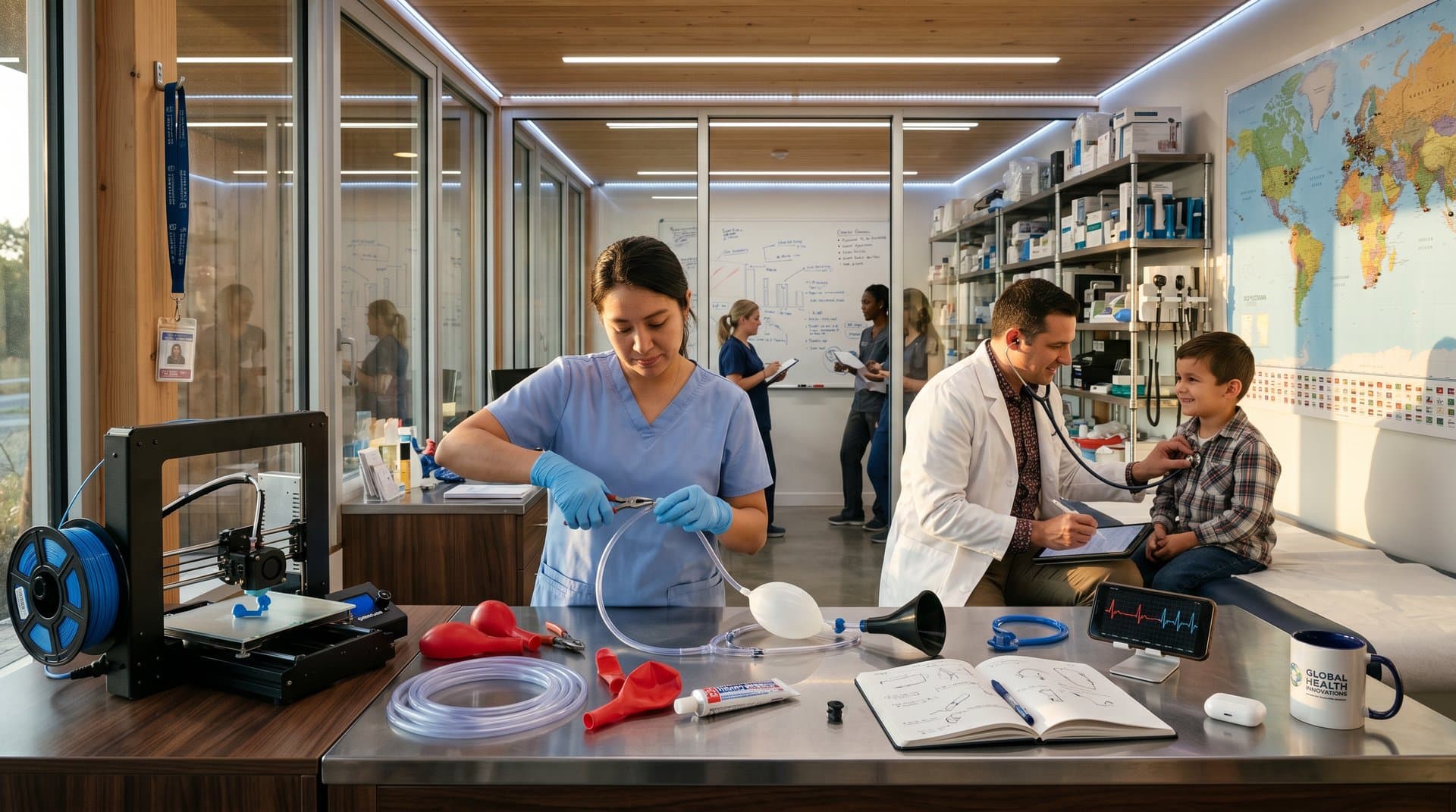
- Open-source stethoscope costs $2.5 to $5 to produce using local materials.
- Design delivers clear heart and lung sounds without electronics.
- Fintech and crowdfunding speed distribution to remote clinics.
Engineers released an open-source stethoscope design. It costs $2.5 to $5 to produce. The tool uses everyday materials like PVC tubing and balloons. It delivers clear heart and lung sounds to underserved regions.
The World Health Organization notes shortages of basic diagnostics in low-income areas. WHO. This design fills the gap. Users download blueprints from GitHub and assemble by hand or with 3D printers.
Communities produce units at scale for under $5 each. No fancy tools needed.
How the Design Captures Clear Body Sounds
A stretched balloon acts as the diaphragm. It vibrates when it touches the skin. These vibrations travel through tubing to the user's ears.
Engineers tuned the tube length to match professional stethoscopes like 3M Littmann models. Users seal joints with silicone from local stores.
Tests show it detects heart murmurs and lung wheezes clearly. No batteries required. It works in areas without power.
Why It Fits Underserved Regions Perfectly
Half the world's population lacks basic diagnostic tools. Doctors in rural Africa and Asia handle too many patients.
Local makers build hundreds weekly. No shipping costs. Training takes minutes. Non-doctors learn to listen effectively.
Health workers pair it with smartphones for telemedicine. They record sounds and upload them. AI tools analyze remotely and connect to experts.
Business Chances in Open-Source Health Tech
Startups sell assembly kits based on the design. Factories in India produce at $3 each. Profits fund growth.
Crowdfunding sites like Kickstarter raise funds. Backers buy kits or donate extras. No need for big investors.
Fintech speeds distribution. Digital wallets handle small payments for parts. Blockchain tracks donations clearly. Wired.
Fintech Speeds Parts to Remote Areas
Apps like M-Pesa in Kenya manage micro-payments. Clinics order tubing and balloons instantly.
Stablecoins fund bulk buys without price swings. Low-fee transfers cut costs.
3D printing hubs in places like Nigeria make parts on demand. Apps track stock in real time.
Impact on Daily Health Checks
Patients get quicker exams. Early detection saves lives. Clinics afford stacks of these tools.
Families build their own. They monitor heartbeats at home. No data privacy worries.
Future models add Bluetooth. Apps will show sound waves.
Schools use them in STEM lessons. Kids learn acoustics by building.
Rapid Growth Expected by 2026
Regulators approve simple devices fast. New rules in Europe and Africa help.
NGOs like the Gates Foundation partner on similar projects.
At $2.5 per unit, makers compete on quality. Costs drop further.
AI will analyze recordings soon. Accuracy matches doctors.
Investors eye real utility here. Tangible tech draws funds amid market caution.
Frequently Asked Questions
What is the open-source stethoscope?
It is a downloadable design for a stethoscope. Users build it for $2.5 to $5 using PVC tubing, balloons, and funnels. GitHub hosts files for free tweaks.
How much does the open-source stethoscope cost?
It ranges from $2.5 to $5 per unit. Local materials keep costs low. Communities scale production easily.
How does the $5 open-source stethoscope improve telemedicine?
Health workers record sounds with phones. Apps upload to AI for analysis. This connects rural areas to city doctors.
What business opportunities does it create?
Kits sell via crowdfunding. Fintech handles payments. Local factories profit from assembly and distribution.