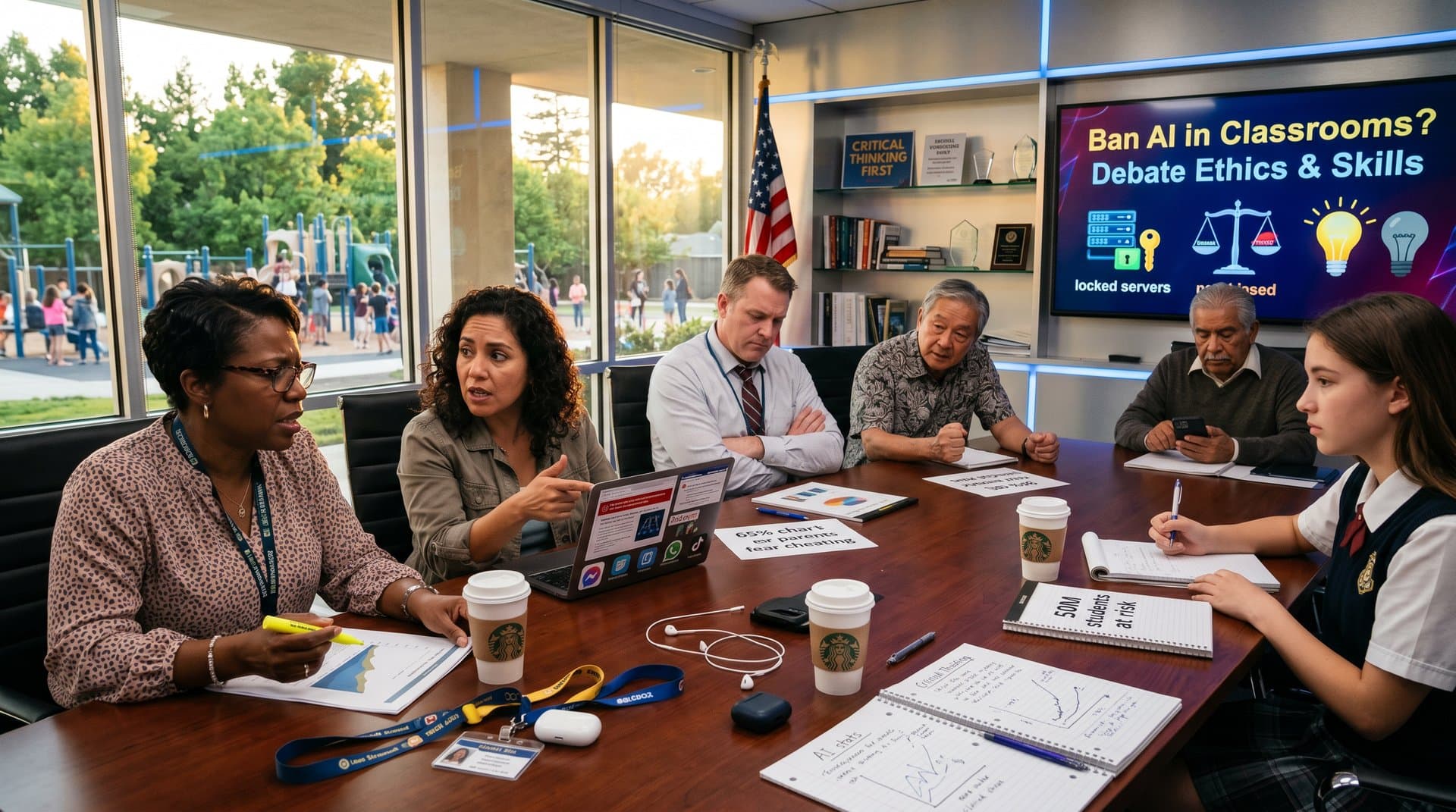
- 1. 50 million K-12 students face AI in classrooms bans pushed by NEA and parents.
- 2. Cheating, privacy risks under FERPA, and biases drive 3 million educators' opposition.
- 3. Edtech firms like Google and Chegg lose revenue amid 13,000 districts' decisions.
US teachers and parents demand bans on AI tools in classrooms. These bans target 50 million K-12 students in public schools. The National Center for Education Statistics (NCES) reported this student count in 2023. The National Education Association (NEA) leads the effort. It points to cheating and privacy dangers.
The NEA represents 3 million educators across the country. AI tools like ChatGPT let students create essays instantly. This undermines learning skills. The American Federation of Teachers (AFT) agrees. It demands strict rules before schools use any AI.
Key Reasons Teachers Oppose AI in Classrooms
Students use ChatGPT to write homework fast. Teachers detect it sometimes. But AI detection software fails often. The NEA warns this hurts critical thinking. See the NEA's guidelines.
AI tools store student data on servers from Google and Microsoft. This raises privacy risks. The Family Educational Rights and Privacy Act (FERPA) protects student information. Breaches could expose personal details. AI also carries biases from its training data. These biases harm minority students most.
Teachers worry about job security. AI could grade assignments or create lesson plans. The NEA stresses humans must oversee all AI use.
Bans Hurt Edtech Companies' Revenue and Growth
Google adds AI to its Workspace for Education. This product reaches millions of students. Classroom bans slow new sign-ups. They cut future revenue. Microsoft tests Copilot for schools. Pushback delays these sales.
Duolingo builds AI into language apps. It tailors lessons to each user. Chegg lost 50% of its business after ChatGPT arrived. The company shared this in its 2023 earnings report. Investors track every ban headline.
The edtech market will reach $300 billion USD by 2025. HolonIQ research predicts this growth. AI fuels most of it. Bans create big roadblocks. A Brookings Institution analysis calls for smart changes instead.
What AI Tools Schools Consider for Classrooms
AI uses large language models (LLMs). Developers train LLMs on billions of web pages. They predict next words to form responses. Google Gemini solves math problems. Microsoft Copilot helps draft teaching materials.
Duolingo applies reinforcement learning. This method raises difficulty as students improve. It rewards correct answers. But AI often hallucinates. It invents facts with total confidence.
Schools run these tools through web browsers or apps. IT staff upgrade internet networks. Costs climb for local districts. NCES counts over 13,000 US school districts handling this work.
Parents and Students React to AI in Classrooms
Parents fill school board meetings. They vote on AI policies. AI shortcuts weaken skills for college and jobs.
Future careers need human creativity. AI takes over routine tasks. Bans teach ethics and debate. Parents team up through PTAs. They email state lawmakers.
Common Sense Media's 2024 poll shows 65% of parents fear AI cheating.
States and Feds Set AI Classroom Rules
California reviews AI in lesson plans. New York requires teachers to disclose AI use. Seattle banned ChatGPT in 2023. Florida blocks tools without human checks.
The US Department of Education released guidelines. Its AI report focuses on safety first. Unions push for teacher training on AI.
Tech companies lobby hard. New rules slow AI spread to 50 million students.
Districts Pick and Choose AI Tools Carefully
Some districts allow AI math helpers. They block essay writers. Federal funding soon links to these choices.
Tech firms boost transparency now. Parents want details on data handling. Pushback leads to safer designs.
The next major education bill will decide AI's classroom role nationwide. NEA and AFT plan to shape it. Edtech stocks swing with ban news. Chegg shares fell 50% after ChatGPT launched.
Debates over AI in classrooms mix caution with innovation. Leaders aim to protect 50 million students while unlocking AI benefits.
Frequently Asked Questions
Why oppose AI in classrooms?
Cheating via ChatGPT essays, privacy risks to Big Tech servers, and fading critical thinking top NEA concerns for 50M students.
What risks do AI tools pose in US schools?
Hallucinations invent facts. Biases affect groups. FERPA data protection falters with cloud storage.
How do unions respond to AI in education?
NEA (3M members) demands oversight. AFT wants rules. Both fight unchecked rollout.
What rules target AI in classrooms?
States like NY require disclosures. Feds guide safe use. Districts like Seattle enact bans.