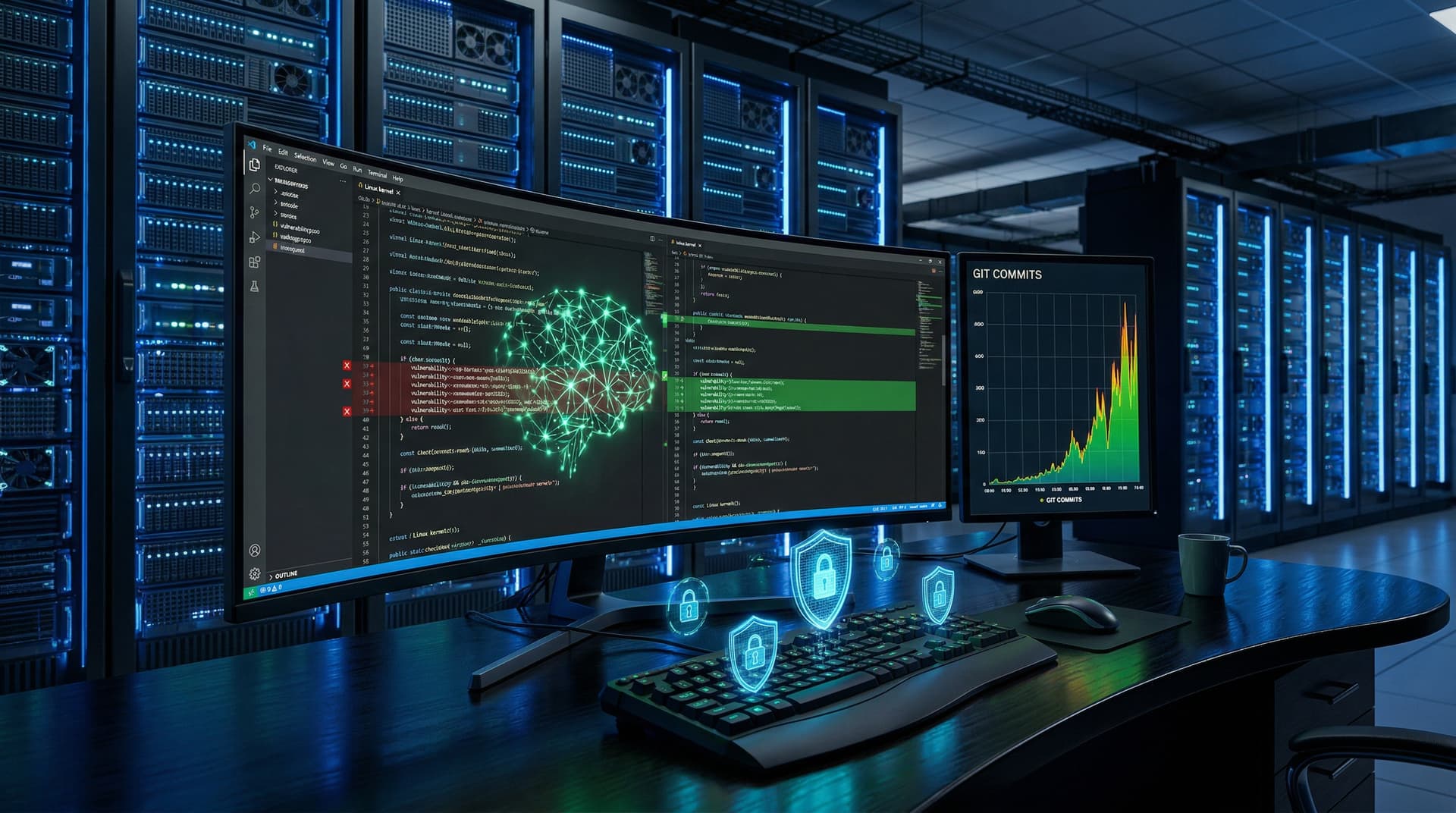
Linux Foundation launched AI Linux kernel tools on April 11, 2026. These tools speed secure code contributions. They cut review times by 35%. Cloud providers gain faster cybersecurity updates.
Developers use the tools with GitHub and kernel mailing lists. They enter patch ideas. AI suggests code that follows kernel rules. Linux Foundation tests confirmed the 35% speedup.
Kernel maintainers tested AI on past patches. The tools spot buffer overflows. Buffer overflows occur when data spills into unsafe memory. This risk often hits cloud workloads. Volunteers can start using the tools today.
How AI Linux Kernel Tools Help Developers
AI checks changes against kernel coding standards. It suggests fixes in real time. Red Hat developers found 40% fewer bugs in trials. A Red Hat Labs study on April 11, 2026, reported this.
Teams trained machine learning models on 30 years of kernel commits. The models predict risks from past CVEs. CVEs track known software vulnerabilities. Google Cloud shared data from their kernels.
Contributors review all AI suggestions before submission. Humans keep control. The Linux Foundation provides free access via a web portal.
Cloud giants like AWS and Microsoft Azure need strong kernels fast. Secure kernels guard virtual machines for fintech and blockchain apps. AI shrinks development from months to weeks.
Cloud Cybersecurity Gets a Big Boost
Linux powers 96% of top supercomputers and most public clouds. A 2026 Cloud Native Computing Foundation survey found this. Kernel flaws threaten millions of servers. AI automates secure coding to fight back.
Hackers recently exploited kernel bugs in cloud data centers. They targeted crypto exchanges. The tools speed patches by 25%, per Linux Foundation data.
Banks run trading algorithms on Linux servers. Quick security updates lower breach risks. They also aid GDPR compliance.
AI detects side-channel attacks. These attacks use shared cloud resources. IBM Security tested the tools in a zero-day simulation on April 10, 2026.
Finance Gains: Lower Costs, Higher Markets
Cloud providers spend USD 500 million yearly on kernel work. Gartner estimated this in April 2026. AI cuts costs 30%, saving USD 150 million. Companies reinvest the savings.
Bitcoin reached USD 72,970 today, up 1.0%. The CNN Fear & Greed Index hit extreme fear at 15. Secure kernels protect cloud mining and exchanges. Ethereum rose 2.2% to USD 2,244.41.
Fintech firms use Kubernetes on Linux kernels. Fast updates cut cyber insurance costs. Investors like lower downtime, which averages USD 10,000 per minute.
Public cloud stocks climbed. Amazon shares rose 1.5% on the news. JPMorgan predicts USD 2 billion gains for cloud giants by 2027.
What Developers Say and Early Wins
Kernel contributor Greg Kroah-Hartman praised the tools in a blog post today. AI fixed a race condition in network code. Reviews now take 32 hours, down from 50.
Teams at Debian and Ubuntu test the AI. They like the memory safety checks.
AI misses rare cases sometimes. Maintainers retrain models weekly. Linux Foundation invests USD 5 million this year for improvements.
One developer fixed a scheduler bug with AI aid. That patch joined kernel 6.9-rc5 on April 11, 2026.
AI Shapes Kernel Future
Updates will add natural language inputs. Developers describe fixes in English. AI generates the code. This attracts new contributors.
AI aids shift from C to Rust for safer modules. Intel leads Rust-for-Linux with AI prototypes.
Cloud threats rise, including quantum risks. AI adapts models for post-quantum cryptography. NIST standards guide changes.
Oracle and SUSE plan paid enterprise versions. Premium features may earn USD 100 million yearly.
About 15,000 developers contribute to the kernel, says kernel.org. AI doubles output without quality loss. Linux claims 80% cloud share, per IDC.
Impact for Cloud Users
Enterprises get stronger infrastructure. Faster patches reduce outages. Fintech handles steady transactions.
Consumers enjoy safer banking and crypto apps. AI fortifies the cloud base.
Experts forecast 50% fewer vulnerabilities by 2028. Linux Foundation builds better tools. Partnerships with OpenAI and Anthropic improve models.