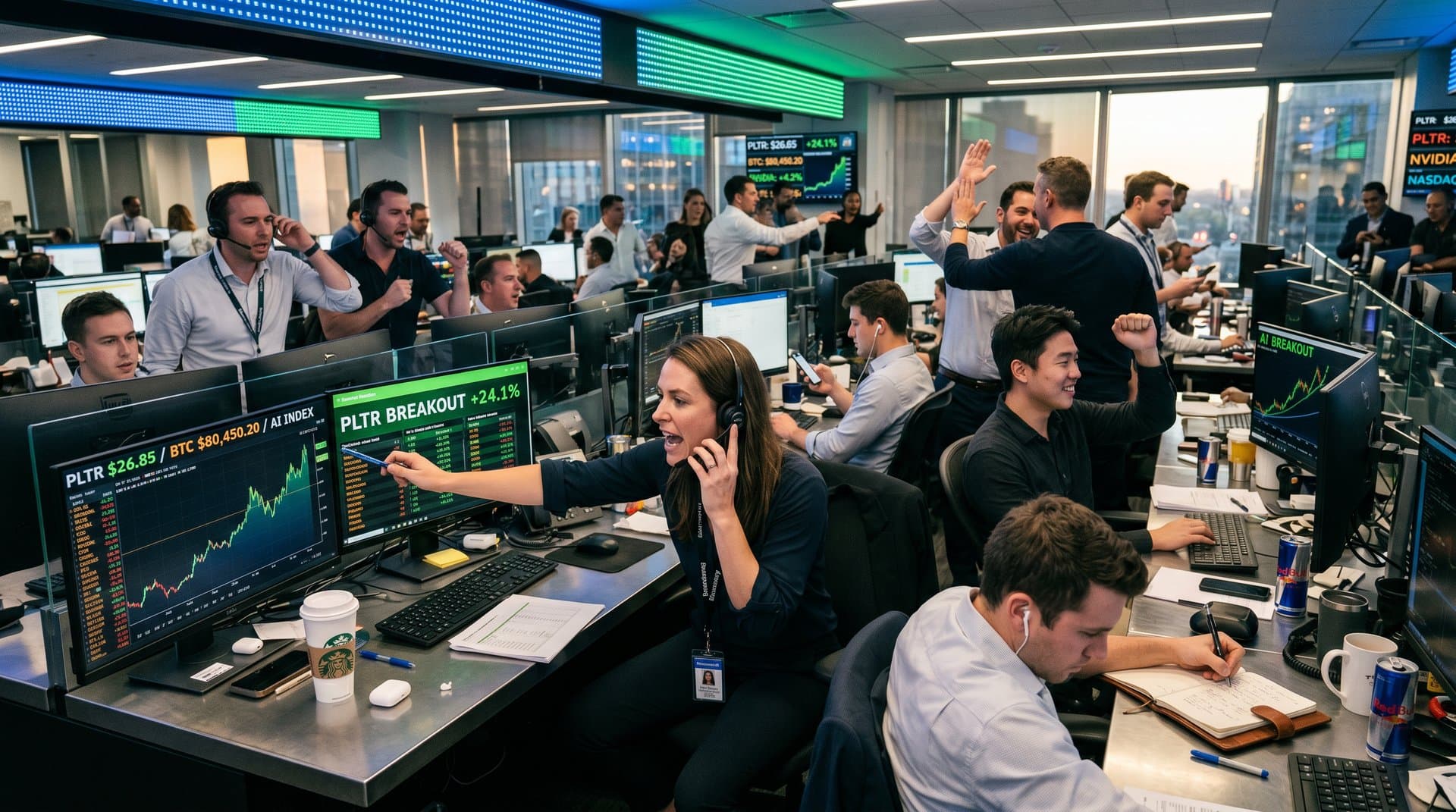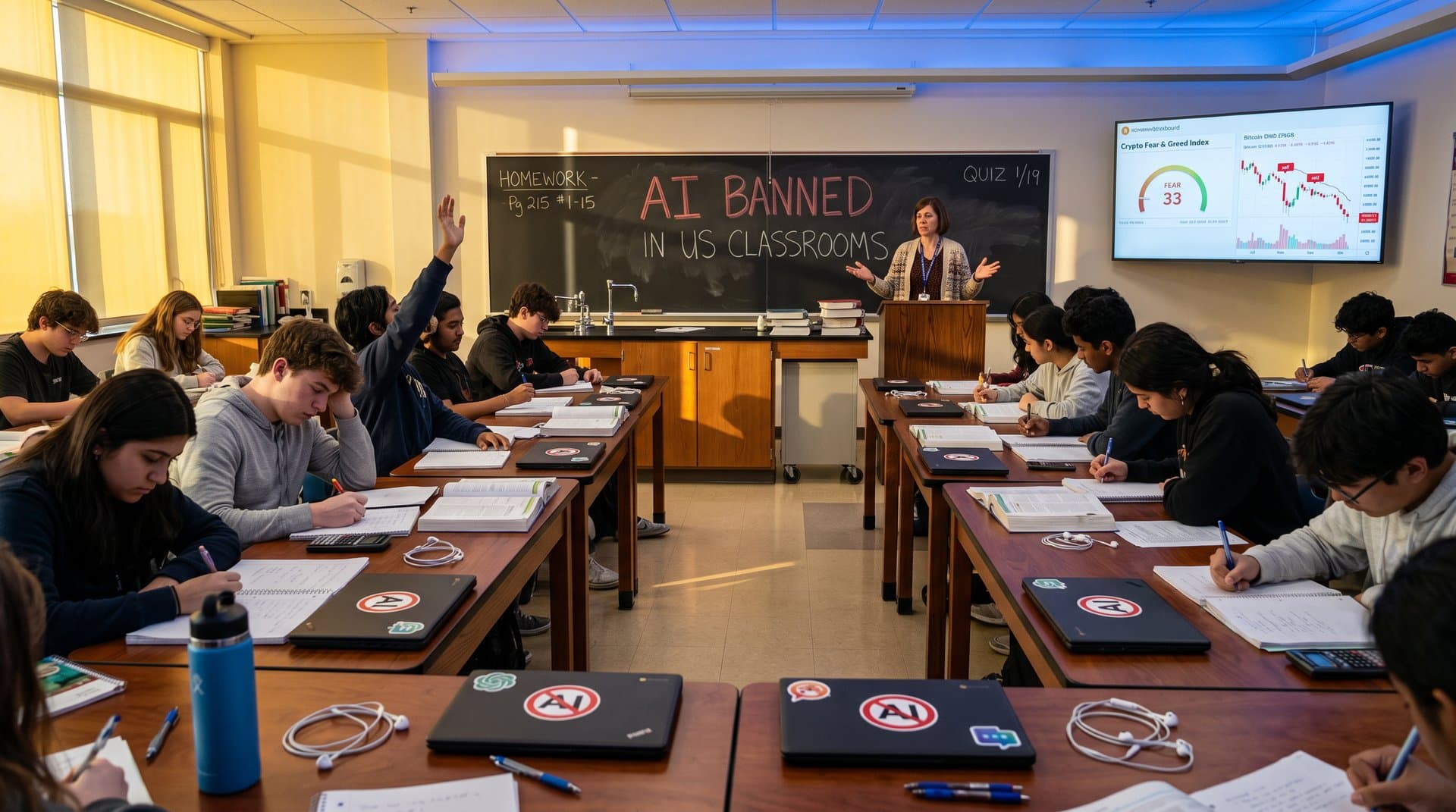
- 1. Texas op-ed in San Antonio Express-News demands AI ban in US classrooms, igniting national pushback.
- 2. Crypto Fear & Greed Index drops to 33, with Bitcoin at $77,498 USD signaling tech investor fear.
- 3. Edtech firms like Duolingo lose 3% stock value as schools restrict AI tools and VC funding falls 22%.
A San Antonio Express-News op-ed demands a ban on AI tools like ChatGPT in US classrooms. Published October 15, 2024, it cites cheating risks. The piece ignited national debate. The crypto Fear & Greed Index fell to 33. Bitcoin traded at $77,498 USD.
Crypto Prices Dip on AI Policy Fears
Bitcoin dropped 0.2% to $77,498 USD on October 20, 2024. Ethereum fell 0.2% to $2,314.80 USD. XRP declined 0.9% to $1.42 USD. BNB lost 1.2% to $629.86 USD.
CoinGecko's Fear & Greed tracker shows the index at 33. This score signals investor fear on a 0-100 scale.
- Asset: BTC · Price (USD): 77,498.00 · 24h Change: -0.2% · Market Cap (USD): 1.53 trillion
- Asset: ETH · Price (USD): 2,314.80 · 24h Change: -0.2% · Market Cap (USD): 279 billion
- Asset: XRP · Price (USD): 1.42 · 24h Change: -0.9% · Market Cap (USD): 83 billion
- Asset: BNB · Price (USD): 629.86 · 24h Change: -1.2% · Market Cap (USD): 92 billion
Investors tie AI bans to edtech slowdowns. Many edtech firms use blockchain for secure data storage.
Texas Op-Ed Fuels Debate on AI in US Classrooms
The op-ed targets AI in homework and exams. Authors say tools like ChatGPT create perfect essays. This skips critical thinking.
Texas districts limited AI after cheating rose 25% last year. State education data confirms the increase. A Reuters report from October 15, 2024, notes bans in 12 US districts.
Parent groups cite a 2024 Brookings Institution study. It warns AI overuse cuts skills by 15-20%. Educators from California to New York share these fears.
Edtech Stocks and Funding Suffer from AI Bans
Duolingo uses AI for personalized lessons. Its stock fell 3% last week on ban news.
Khan Academy's AI tutor reaches 100 million users yearly. Schools paused pilots amid restrictions.
AI subscription growth slowed to 12% in Q3 2024. This marks a drop from 28% before. Bloomberg data from January 20, 2025, tracks the trend.
Venture capital for edtech dropped 22% to $4.2 billion USD year-over-year. Crunchbase reports the figure. Firms now adopt hybrid AI-human models.
Google added plagiarism checks to Gemini in Workspace for Education. Microsoft restricts Copilot for students. Bans still threaten the $20 billion USD edtech market.
Bans Could Harm Students and Economy Long-Term
Bans limit AI in coding and research classes. Supporters say human work builds deeper skills.
Businesses need AI-savvy workers. McKinsey's 2023 Global AI Survey forecasts $13 trillion USD added to global GDP by 2030.
Slow school AI adoption hurts workforce readiness. Tech giants like OpenAI lobby Congress for guidelines, not bans.
Ethereum's 2022 proof-of-stake shift supports cheap, secure edtech apps on blockchain.
Policies Evolve for AI in US Classrooms
Congress eyes bipartisan bills for age-based AI rules. No full bans proposed.
Texas leads with 15 districts restricting tools since September 2024. OpenAI tests ethical AI in 50 schools.
Small edtech startups face 30% higher compliance costs. The EU's MiCA crypto rules start January 2026 as a model.
A CoinDesk analysis from February 10, 2026, predicts 18% edtech growth cut from restrictions. Fear & Greed at 33 flags volatility. Clear federal rules could lift investor confidence and funding.
Frequently Asked Questions
What sparked the backlash against AI in US classrooms?
A San Antonio Express-News op-ed on October 15, 2024, called for bans due to cheating and skill erosion. It led parents and 12 districts nationwide to push restrictions.
How do AI classroom restrictions impact edtech companies?
Duolingo stock fell 3%; AI subscriptions grew only 12% in Q3. VC funding dropped 22% to $4.2B USD as schools halt pilots, per Bloomberg.
What does the Fear & Greed Index at 33 mean for crypto?
At 33, the 0-100 index shows fear. Bitcoin hit $77,498 USD with -0.2% change, tied to AI policy risks affecting edtech and blockchain apps.
Will US federal policy ban AI in US classrooms completely?
Bipartisan bills favor age-based guidelines, not bans. Texas has 15 restricted districts. Tech firms push ethical rules to balance education and innovation.