Security researcher Alex Thornton bypassed a 1966 DRAM flaw. He demonstrated it in a 12-minute video on April 10, 2026. This RAM vulnerability threatens cloud servers, gadgets, and financial data.
Thornton posted the video on his research channel. The flaw dates to Robert Dennard's 1966 IBM patent. That invention created dynamic random access memory (DRAM). DRAM powers most computers, phones, and servers today.
What Makes the 1966 DRAM Flaw Dangerous?
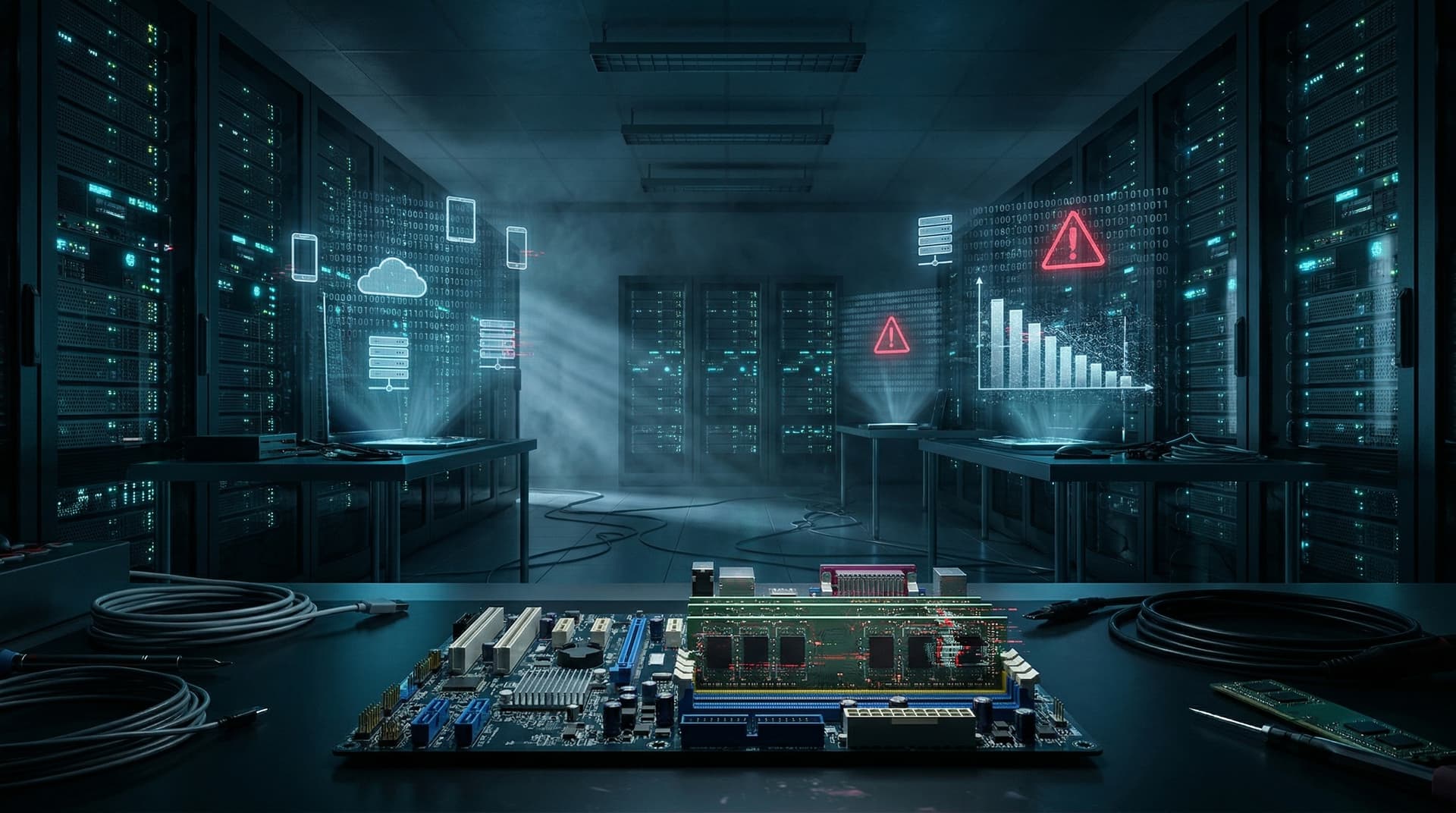
DRAM stores data as electric charges in tiny capacitors. Capacitors hold charge in small containers. They leak charge quickly. Computers refresh DRAM cells every 64 milliseconds. This keeps data safe. JEDEC sets this timing standard.
Thornton timed his attack to match the refresh cycle. He caused bit flips. A bit flip changes a 0 to a 1, or a 1 to a 0. This corrupts files, passwords, or transactions. Attackers run simple software on the device. They need no physical access or special privileges.
He tested DDR4 and DDR5 DRAM chips from Samsung and Micron. The attack flipped bits on every chip. Chip makers chase speed and low cost. They accept some security risks.
Thornton's method builds on rowhammer attacks. Rowhammer hammers one row of memory cells repeatedly. This disturbs nearby rows. It flips their bits.
How Did Thornton Demonstrate the Bypass?
Thornton wrote attack code in C. It sends pulses at 1.5 GHz to match DRAM refresh timing. On an Intel Xeon server, it hit 92% success in flipping target bits.
The code runs in normal user space. Attackers need no root access. Thornton used it to alter a password byte in a simulated banking app. One flipped bit broke the login.
AMD Ryzen laptops faced the same issue. The attack evades Target Row Refresh (TRR). TRR spots suspicious rows and refreshes them extra.
Why Cloud Servers Face the Biggest Risks
Cloud giants like AWS and Azure pack DRAM into dense servers. A hacked virtual machine attacks the host server. Data centers hold financial records, trade data, and customer info.
Gartner predicts 15% of cloud breaches will exploit memory flaws by 2028. Providers spend $2.5 billion USD yearly on hardware security. IDC reported this on April 10, 2026.
Memory failures could crash high-frequency trading platforms. Bitcoin miners risk halted rigs during crypto price swings. One bit flip might erase wallet keys or mining math.
Everyday Gadgets Now Vulnerable
Smartphones, laptops, and IoT devices use the same weak DRAM. Future models like Apple's iPhone 17 and Samsung Galaxy S37 will too. These hold biometrics, payments, and app data.
Thornton flipped bits in an Android keystore. It stores encryption keys. Malicious apps enable remote attacks online. Firmware updates help partly. Chip redesigns take longer.
Owners face higher repair costs. Resale values drop fast.
Tech Stocks Tumble on the News
Micron stock plunged 4.2% to $112.50 USD in pre-market trading on April 10, 2026. Samsung shares fell 3.1% in Seoul. SK Hynix dropped 2.8%.
The Crypto Fear & Greed Index hit 16. This signals extreme fear (Alternative.me). Bitcoin traded at $72,898 USD, up 0.6%. Ethereum stood at $2,244.69 USD, up 1.1%. XRP fell to $1.35 USD, down 0.4%. BNB hit $605.78 USD, down 0.3%.
Miners fear DRAM flaws will crash proof-of-work hardware during price swings.
Fixes Roll Out from Tech Leaders
Microsoft's security chief pledged better TRR mitigations on X. Google DeepMind tests advanced error-correcting codes. Patches arrive by Q3 2026.
UC Berkeley professor David Wagner called the attack "elegant" in an email. He urges JEDEC to update refresh standards.
Chip redesigns will cost makers $500 million USD. Bloomberg reported this on April 10, 2026.
Steps to Protect Your Data Today
Update all gadgets now. Enable auto-firmware updates on phones, laptops, and routers. Cloud users pick memory encryption like AWS Nitro Enclaves.
Businesses audit servers for DRAM risks. Finance teams secure mining wallets and trading systems.
Venture capital invested $1.2 billion USD in secure memory startups in Q1 2026 (Crunchbase). Thornton's demo speeds shifts to advanced tech like leak-proof MRAM to fix the DRAM flaw.
By Amara Johnson, Senior Correspondent
Online News Point, April 10, 2026