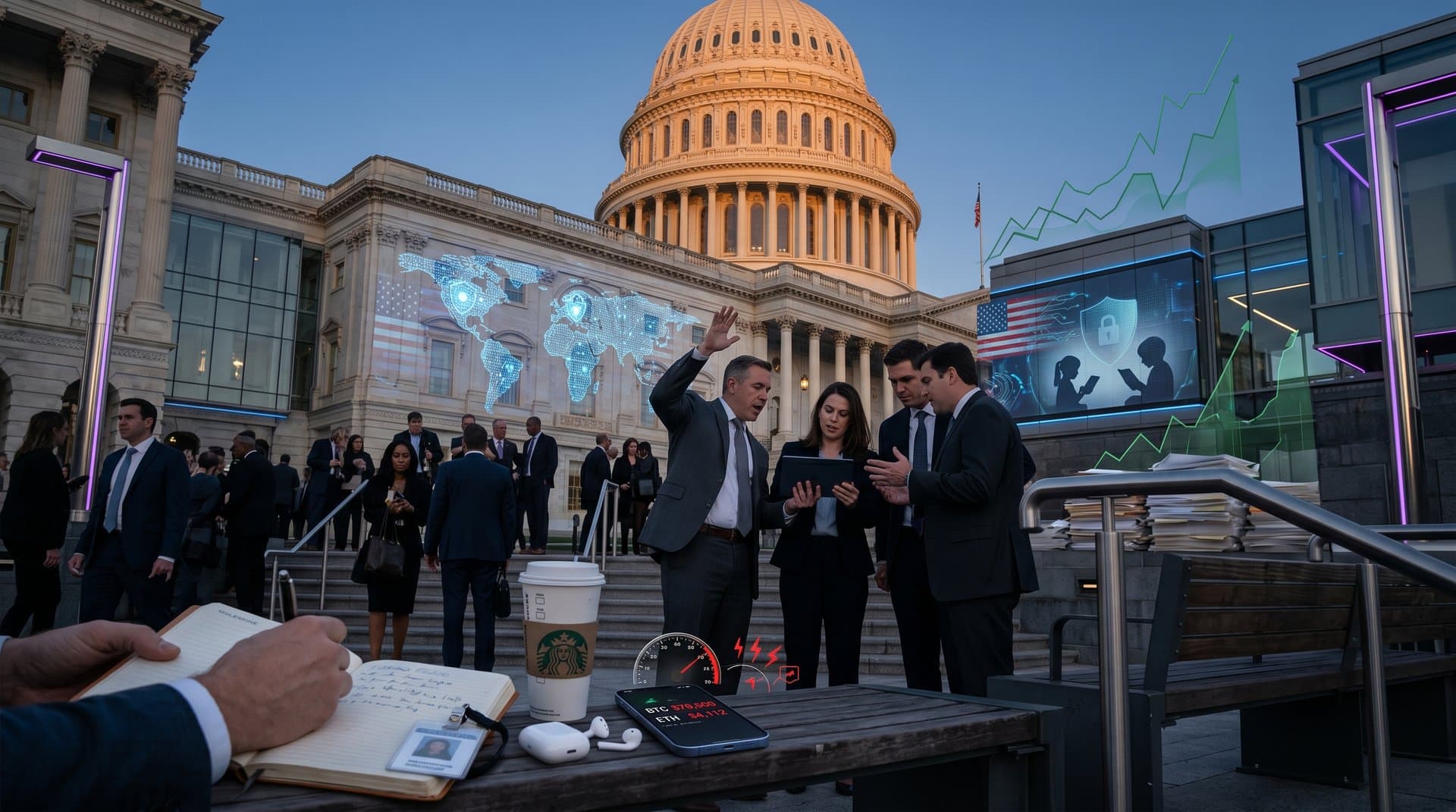
- 1. Bipartisan US AI bills fund $2B research hubs to lead against China.
- 2. Platforms audit AI risks to minors and add age verification tools.
- 3. Fear & Greed Index at 26 reflects crypto caution amid new policies.
Bipartisan US AI bills advanced in Congress this week. They fund $2 billion for AI research hubs. Lawmakers also added rules to protect children online. The crypto Fear & Greed Index fell to 26. This index measures trader sentiment from 0 (extreme fear) to 100 (extreme greed). Bitcoin traded at $76,588 USD. Ethereum reached $2,294 USD. Data comes from CoinMarketCap on September 12, 2024.
Bills Boost US AI Research Against China
Lawmakers introduced bills that provide $2 billion for AI research hubs. These centers create partnerships between government and companies like Google DeepMind and OpenAI. The goal is clear: help the US develop AI faster than China. Faster federal grants support this effort. It strengthens national security by keeping advanced tech at home.
BlackRock announced a $10 billion investment in AI infrastructure, according to its SEC filings. Venture capital firms target AI companies that follow new US rules. Crypto markets remain cautious. XRP dropped 1.1% to $1.38 USD. BNB fell 0.2% to $624.95 USD, per CoinMarketCap.
PYMNTS.com reported on the bill texts on September 10, 2024. They include research and development mandates. PYMNTS.com details the bill texts.
China released new state-backed AI models. US firms lead with private-sector speed. Investors watch for bill passage. Analysts predict Nasdaq AI stocks like NVIDIA could rise 5-10% if approved.
Platforms Must Audit AI for Child Safety
Social media platforms now audit their AI algorithms for risks to children under 18. AI can push harmful content like violence or exploitation. Platforms trigger reviews for these issues. Meta and TikTok build compliance teams. They add age verification tools to block kids from adult content.
The Federal Trade Commission (FTC) enforces these rules. Tech companies set aside $500 million for legal defenses. Coinbase tests AI tools to moderate content. USDT holds steady at $1.00 USD, per CoinMarketCap.
Market fear at 26 ties to regulation concerns. Parents get better app controls. Congress.gov tracks the Kids Online Safety Act (S.1409), introduced in 2023. Congress.gov tracks the Kids Online Safety Act (S.1409).
YouTube already scans 100% of kids' videos. New rules extend checks to AI-driven feeds. Fines hit $43,280 per violation. This pushes platforms to prioritize safety over engagement.
Bipartisan Support Drives Fast AI Progress
Democrats and Republicans agree on AI leadership. Senators Richard Blumenthal (D-CT) and Marsha Blackburn (R-TN) lead child safety efforts. The bills fund $500 million for quantum-AI projects.
A National AI Commission will create a US strategy. China moves quickly in AI. US export controls stop tech transfers to rivals. Investors prefer US-based AI stocks.
Reuters covered the bipartisan push on September 10, 2024. Betting markets give 70% odds for passage. Reuters reports on the bipartisan momentum.
AI chip demand grows fast. TSMC reported 20% revenue increase from AI orders in its latest earnings.
Bills Shift Tech and Crypto Investments
Venture firms like Andreessen Horowitz invest $5 billion in AI startups. Tax credits reward ethical AI development. Big Tech companies gain an edge over startups.
Crypto reflects fear at 26. Ethereum's proof-of-stake reduced energy use by 99% since 2022. It now powers AI applications efficiently. Solana handles 65,000 transactions per second for content moderation.
Bitcoin ETFs saw $1 billion in inflows after 2024 approvals. McKinsey & Company estimates enterprise AI boosts revenues by 15%. This data comes from their recent report.
Crypto Markets Show Caution on Policy News
The Fear & Greed Index at 26 indicates extreme fear. Traders sell off amid regulation talk. Bitcoin's volatility index rose 10%, per market data.
Altcoins struggle. Solana fell 0.5% to $145 USD. Chainlink dropped 1% to $12.50 USD, according to CoinMarketCap on September 12, 2024.
New rules favor compliant projects. AI-blockchain hybrids attract interest. Render Network's AI rendering tokens rose 2%.
Real-World Impacts for Users and Investors
Users gain safer AI tutors for learning. Parents set strict exposure limits on apps. Banks like JPMorgan use compliant AI to detect fraud faster.
Crypto wallets add child safety locks. Bill passage unlocks $2 billion in funding. Delays increase market fear.
The Financial Times analyzed regulation effects. Financial Times analyzes regulation effects. PwC predicts AI will add $15 trillion to global GDP by 2030.
Investors buy during dips. Long-term, these bills could drive 20% growth in the AI sector. US leadership secures economic gains.
Frequently Asked Questions
What are the bipartisan US AI bills?
Bipartisan US AI bills fund $2B in research for leadership against rivals like China. They include R&D grants and national security measures. Congress coordinates public-private efforts.
How do bipartisan US AI bills protect children?
The bills impose duties of care on platforms for AI risks to minors. Age verification and harm audits become mandatory. Federal Trade Commission enforces compliance.
What impact do US AI bills have on investments?
Bills promise tax credits for ethical AI, boosting venture capital. Fear & Greed Index at 26 reflects caution. Compliant firms like OpenAI attract funding.
Why is bipartisan support key for AI leadership?
Bipartisan backing speeds passage and funding. It counters global competition. Senators Blumenthal and Blackburn exemplify cross-party unity.