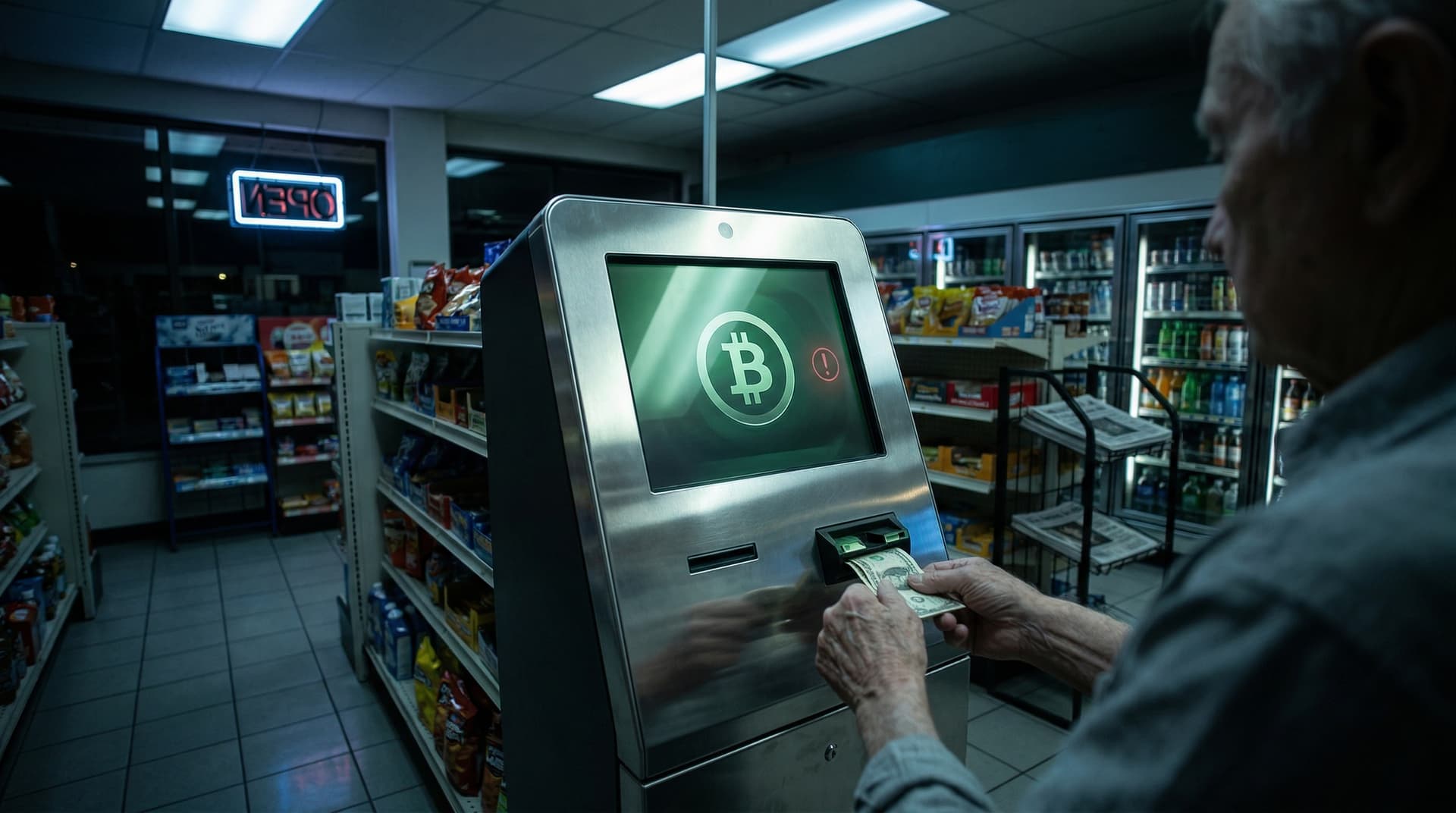
AARP urges U.S. lawmakers to create safeguards against crypto kiosk fraud. The group made this call on April 10, 2026. Scammers target seniors at cash-to-crypto machines in stores like 7-Eleven.
Crypto Kiosks Spread in Retail Spots
Operators placed over 38,000 crypto kiosks across the U.S. by early 2026. Coin ATM Radar shared this data on April 10.
These machines sit in everyday spots like 7-Eleven and Walmart. Users scan a QR code, a square barcode linked to their crypto exchange account. They insert cash to buy Bitcoin or other cryptocurrencies.
Fees average 15-25% per purchase. On a $100 bill, users get just $75-$85 in crypto. The Consumer Financial Protection Bureau highlighted this in its April 2026 report.
Scammers exploit these kiosks. They pretend to help users. Or they plant fake machines. These fakes contain malware that steals wallet details.
Seniors face the highest risks. In March 2026, AARP surveyed 2,000 adults over 50. The survey found 28% had encountered suspicious activity at crypto kiosks. Many seniors lack the knowledge to spot these tricks.
Crypto Kiosk Fraud Tricks Seniors
Fraudsters call victims or leave flyers. They direct people to kiosks. Victims buy crypto and send it to scam wallets.
The Federal Trade Commission reported $1.2 billion USD in crypto fraud losses for 2025. Seniors accounted for 35% of victims, per its Q1 2026 update.
"Pig butchering" schemes build fake trust online over weeks or months. Scammers "fatten up" victims like pigs before demanding money. They guide victims to kiosks. AARP logged 450 such cases among members last quarter.
AI Boosts Scams and Defenses
AI sharpens scams. Machine learning creates personalized phishing texts. Generative AI forges fake crypto exchange websites, according to a February 2026 MITRE Corporation study.
AI fights back too. Banks use AI to detect unusual kiosk purchases. Blockchain firm Chainalysis uses AI to track scam wallets in real time.
Crypto kiosks bypass bank safeguards. Users pay with cash instead of cards or apps.
AARP calls for AI checks at kiosks. Facial recognition could verify user age. It could block large, risky buys from new users.
Rules Lag Behind Kiosk Growth
Some states like California require fee disclosures. Enforcement remains weak.
In March 2026, the Commodity Futures Trading Commission fined kiosk operators $5 million USD. The agency punished them for false advertising.
Volatility Draws Seniors to Kiosks
Bitcoin hit $72,512 USD on April 10, up 2.5% that day (CoinMarketCap). Ethereum reached $2,225.91 USD, up 2.7%.
XRP traded at $1.34 USD (up 1.3%). BNB hit $602.76 USD. Stablecoin USDT held $1.00 USD.
The Fear & Greed Index fell to 16. This gauge scores investor mood from 0 (extreme fear) to 100 (extreme greed). Low scores spark bargain buys.
Seniors turn to crypto to fight inflation. Crypto offers potential gains as everyday prices climb. AARP data shows 22% of adults over 65 own crypto, up from 12% in 2024.
Kiosks allow easy cash purchases without bank links.
AARP's Demands and Lawmaker Response
On April 10, AARP wrote to Congress. The group demands a national kiosk registry. It also calls for fee caps at 1%.
AARP seeks AI monitoring for suspicious transactions.
Senator Elizabeth Warren promises a hearing next week. Her office plans to draft the Crypto Consumer Protection Act by April 20, 2026.
The Bitcoin ATM Industry Association opposes these ideas. Kiosks help unbanked people, it argues. Industry leaders say AI checks threaten privacy.
Steps to Avoid Crypto Kiosk Fraud
Avoid kiosks for now. Use regulated apps like Coinbase instead.
Turn on two-factor authentication everywhere. Double-check wallet addresses before sending.
Families should discuss crypto risks together. AARP starts free scam webinars on April 15, 2026.
Experts suggest dollar-cost averaging. Buy fixed amounts over time on apps. This avoids high fees and volatility risks.
Fintech Future: AI Protections Ahead
Crypto kiosks blend store shopping with digital money. AARP's efforts highlight gaps in crypto kiosk fraud prevention.
Regulators plan AI rules for finance tools. The SEC will issue summer 2026 guidelines on deepfake scams.
The White House Council of Economic Advisers endorsed kiosk oversight in April 2026.
Experts predict federal laws by the end of 2026. AI defenses will build trust in crypto and drive fintech growth.