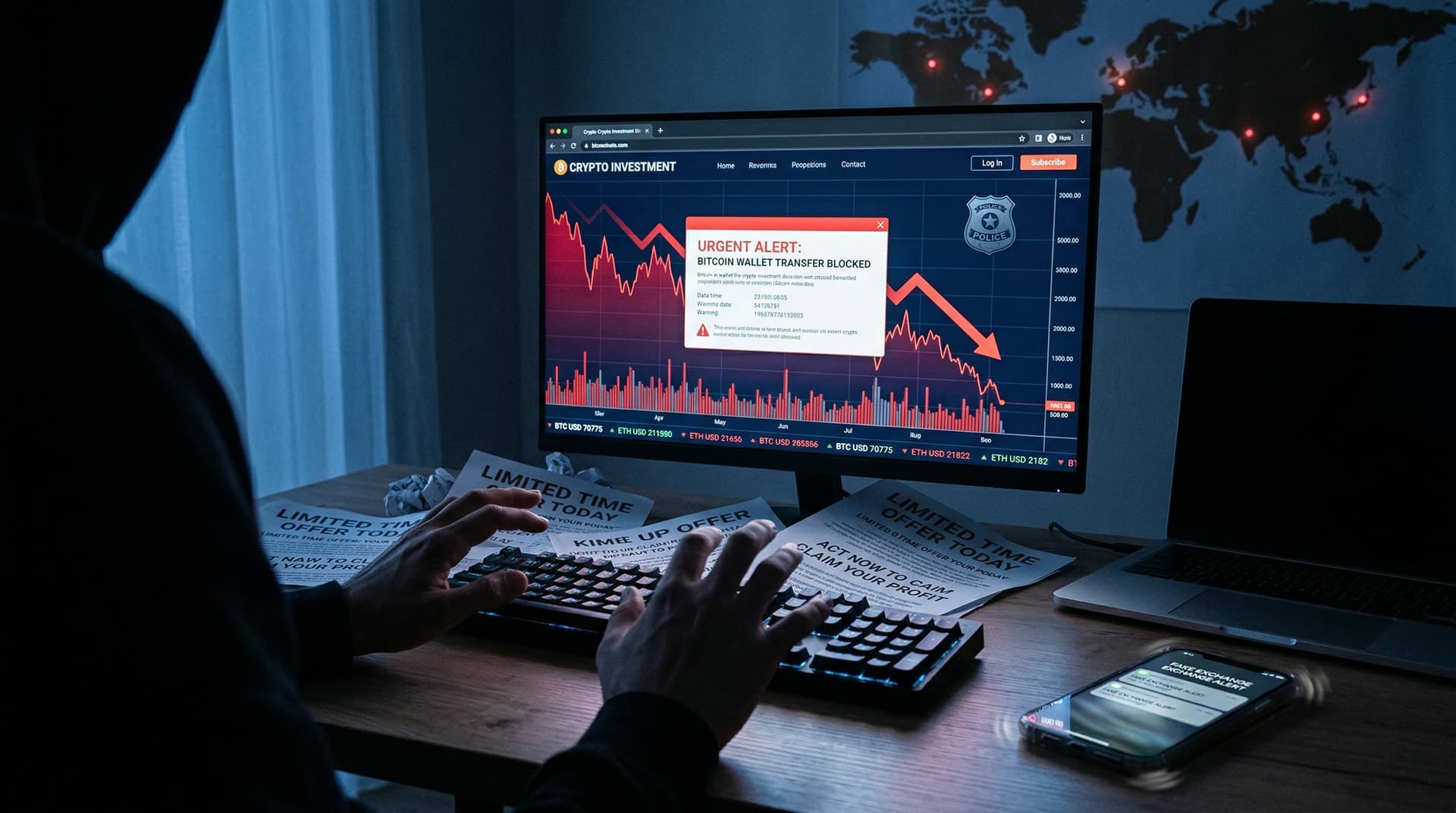
A British Columbia resident lost CAD 11,900 to a cryptocurrency scam on April 12, 2026. The Royal Canadian Mounted Police (RCMP) warns of rising cybersecurity risks in fintech transactions as cryptocurrency markets signal extreme fear.
How the Cryptocurrency Scam Unfolded
Fraudsters contacted the victim through social media. They pretended to be cryptocurrency brokers. They promised high investment returns. The victim sent money to a fake digital wallet address. Scammers then vanished. Police recovered no funds.
This scam used classic tricks. Victims feel rushed. They skip checks. Money transfers happen fast on blockchains.
Cryptocurrency Scam Tactics
Scammers build urgency. They push for quick decisions. They post fake testimonials on scam websites. This B.C. case matches a national trend.
The Canadian Anti-Fraud Centre (CAFC) tracked over 1,200 cryptocurrency scams in 2025. Victims lost CAD 200 million across Canada. British Columbia saw sharp increases in 2026. The RCMP links this to volatile markets.
Volatile markets swing prices daily. Bitcoin can drop 10% in hours. Fear makes people chase "guaranteed" gains. This mindset opens doors to fraud.
Crypto Market Fear Boosts Scam Risks
Cryptocurrency markets signal extreme fear on April 12, 2026. The Fear & Greed Index measures sentiment. It ranges from 0 (maximum fear) to 100 (maximum greed). Alternative.me reported a score of 16.
Bitcoin fell 2.8% to USD 70,775. Its market capitalization—the total value of all bitcoins in circulation—stood at USD 1.4 trillion, per CoinMarketCap. Ethereum dropped 3.0% to USD 2,182.64. XRP lost 1.3% to USD 1.32. BNB declined 2.5% to USD 590.90.
Fearful investors seek fast profits. Scammers offer 20-50% returns overnight. Real investments rarely promise this without high risk.
Fintech and Wallet Vulnerabilities
Fintech apps speed up cryptocurrency transfers. Users buy, sell, and send coins in seconds. This ease creates scam opportunities.
Scammers target popular wallets. MetaMask and Trust Wallet top the list. Two-factor authentication (2FA) adds a security layer. It requires a code from your phone. But social engineering bypasses it.
Phishing sites copy real exchanges like Binance. Victims enter seed phrases there. Seed phrases are 12-24 secret words that recover wallet access. Sharing them hands over full control.
Blockchain transactions confirm in minutes. They prove ownership forever. No bank can reverse them. Victims lose funds permanently.
Hardware wallets fix this. Devices like Ledger Nano store private keys offline. Private keys sign transactions digitally. Kaspersky's 2026 report says they cut remote hack risks by 90%.
New Regulations and Banking Tools
Canadian banks now sell cryptocurrencies directly. Wealthsimple offers simple apps for beginners. The Financial Consumer Agency of Canada demands scam reports.
From April 2026, exchanges must flag suspicious wallets. They use AI to spot patterns. This slows illicit transfers.
Canada's Bill C-27 sets fines up to CAD 10 million for violations. It covers data protection in fintech.
RCMP Tips to Avoid Cryptocurrency Scams
The RCMP shares clear steps:
- Verify contacts. Legit firms never ask for seed phrases or private keys.
- Check URLs. Look for HTTPS and exact matches. Hover before clicking.
- Report fast. Call local police or CAFC at 1-888-495-8501. Quick action traces some funds.
- Use antivirus like Norton. It blocks phishing sites.
- Test transfers. Send CAD 10 first to confirm addresses.
Teach family, especially seniors. They face top risks. B.C. starts free workshops next week.
INTERPOL aids recovery. Recent raids returned CAD 5 million to victims.
Protect Your Crypto Assets Today
Double-check wallet addresses. Copy-paste avoids typos.
Diversify holdings. Stablecoins like USDT, pegged to USD 1.00, shield against price drops.
Watch the Fear & Greed Index. Scores under 20 mean high scam alerts.
Banks add defenses. Royal Bank of Canada (RBC) launches biometrics and AI checks by Q2 2026. Fingerprints and face scans secure logins.
Fintech's Future After This Scam
Cryptocurrency scams damage trust. Everyday users hesitate to adopt crypto for payments or savings. Exchanges spent USD 2 billion on security in 2026, Deloitte reports.
Chainalysis tracks dirty money. They flagged USD 1.5 billion in scams on April 12, 2026.
Quantum computers threaten by 2030. They could crack current encryption. Developers build post-quantum wallets now.
EU's MiCA rules stabilize stablecoins from June 2026. Canada follows suit. Tighter oversight cuts fraud. Safer crypto boosts mainstream finance.
This B.C. cryptocurrency scam urges action. Check tools daily. Secure your wealth before losses hit.