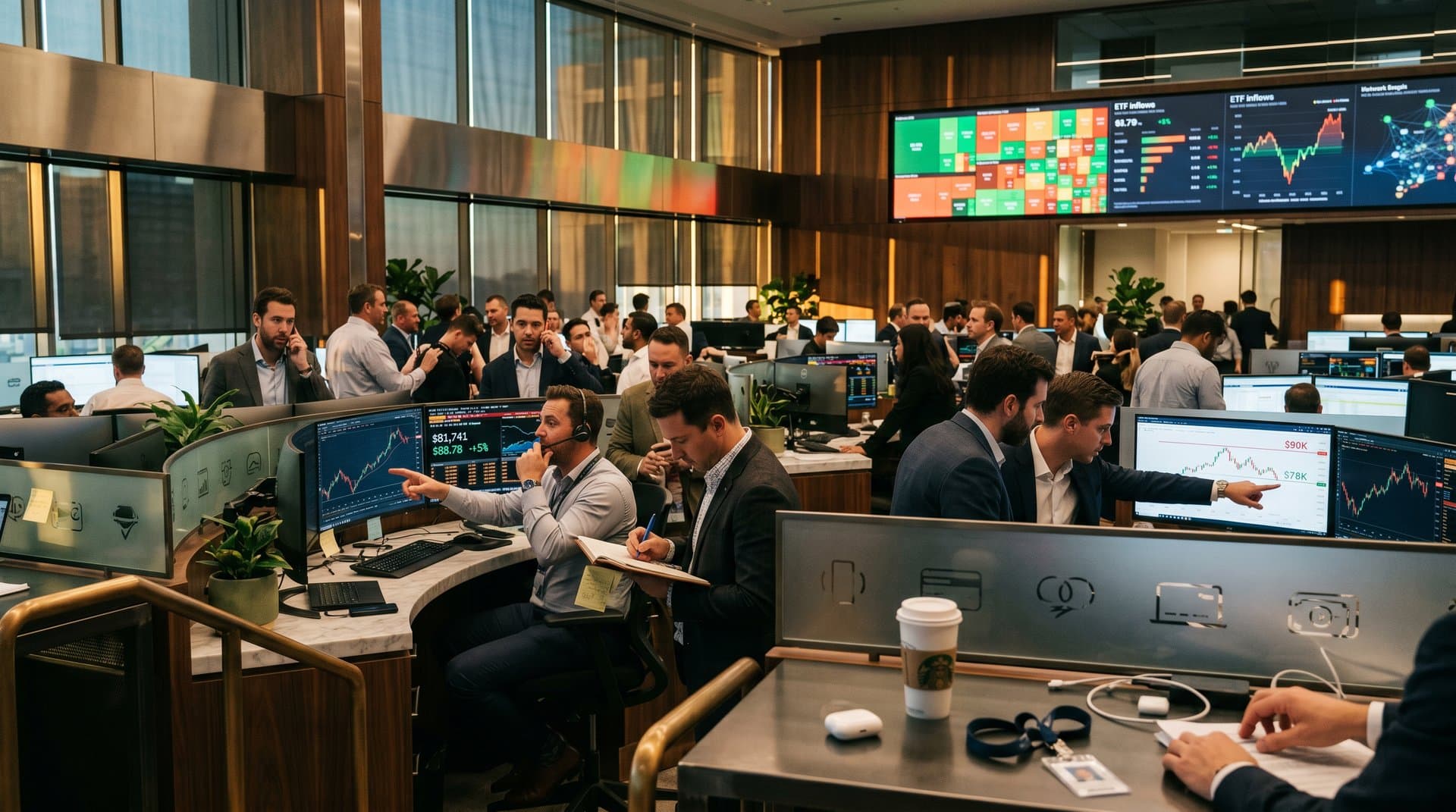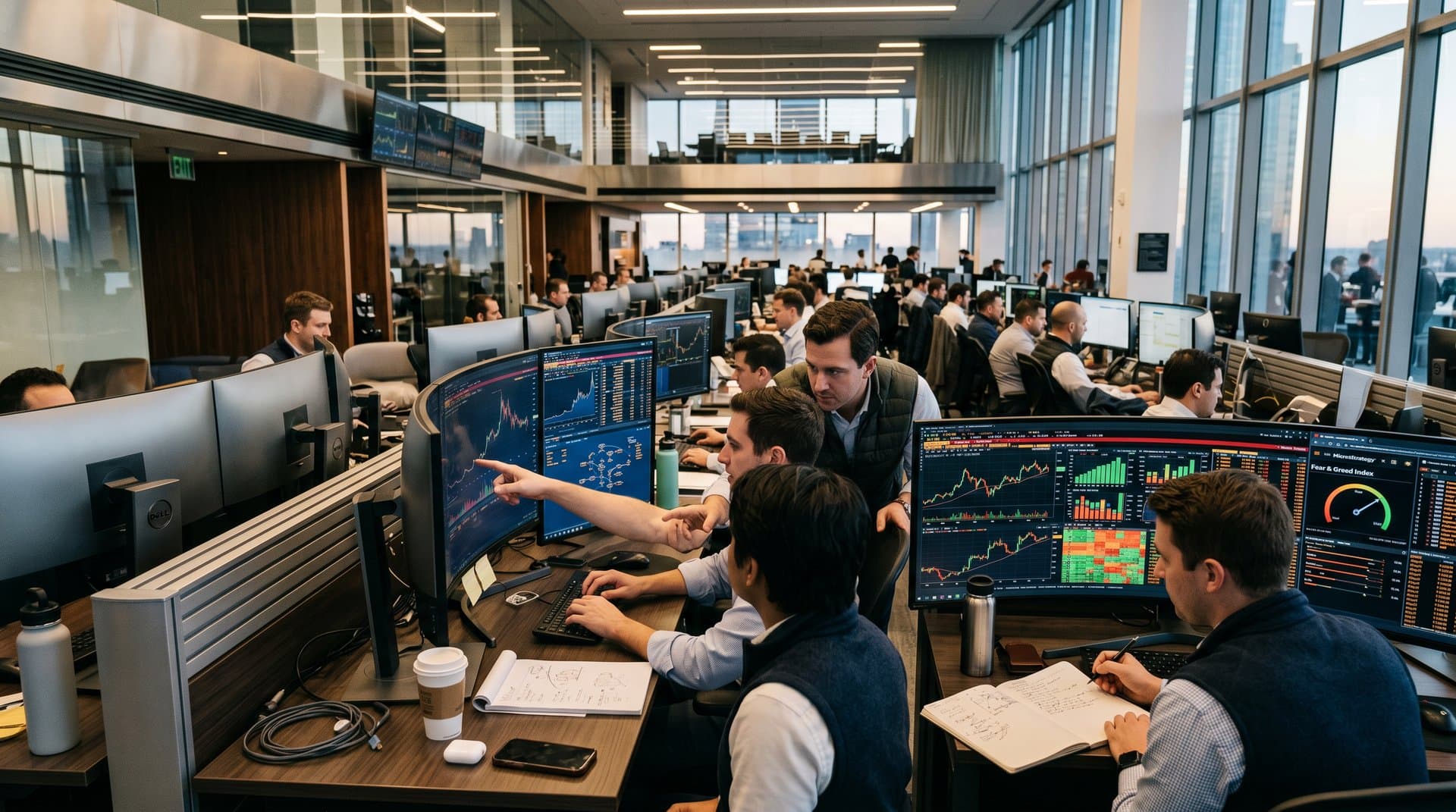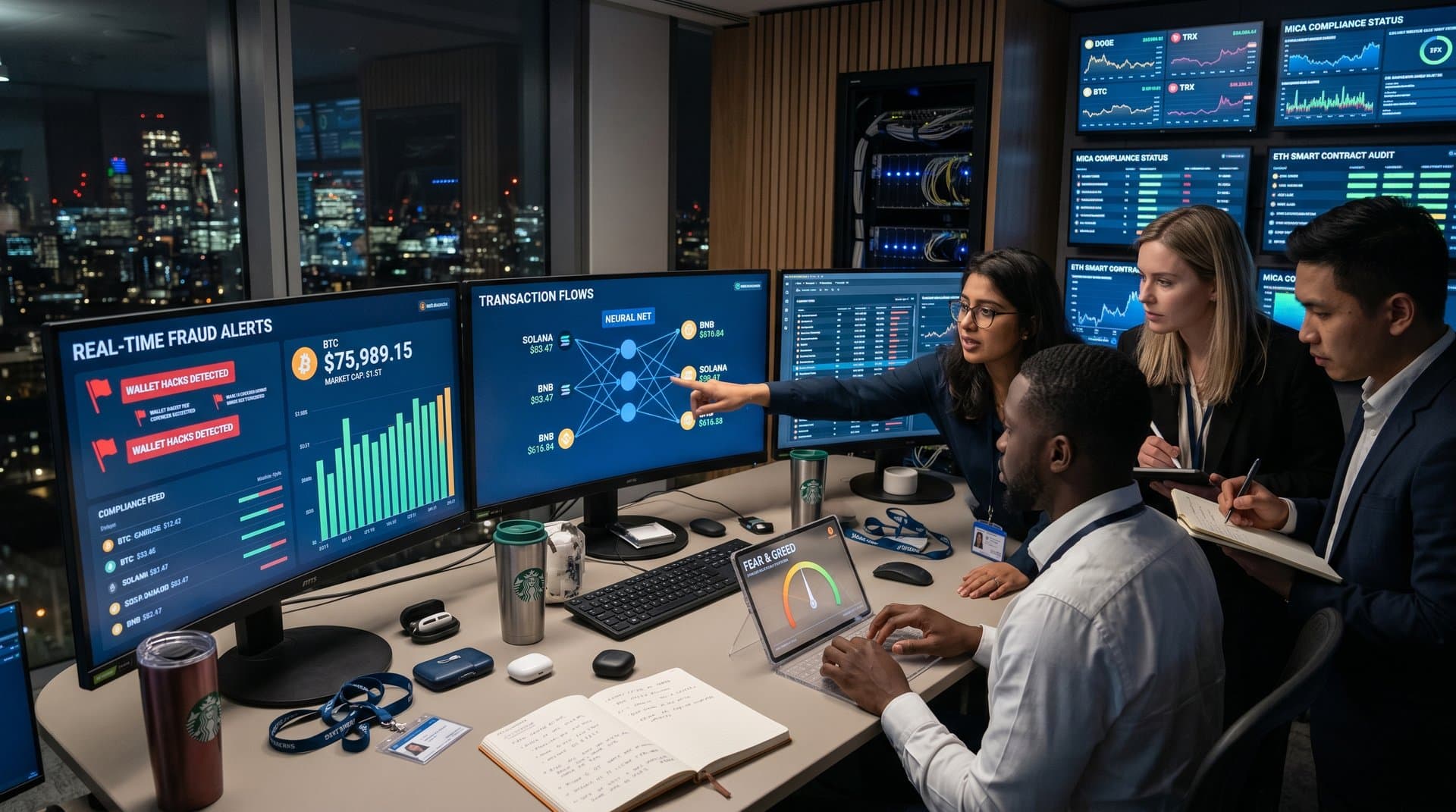
- 1. Deloitte's AI financial crime compliance cuts detection time in $1.52T Bitcoin market.
- 2. Fear & Greed at 26 boosts risks; tools automate MiCA and KYC rules.
- 3. Machine learning outperforms manuals on Ethereum trades and wash fraud.
Deloitte launched AI financial crime compliance tools on July 17, 2024. These tools help fintech companies detect fraud and follow anti-crime rules. Bitcoin reached $75,989 with a $1.52 trillion market cap, per CoinGecko. The Fear & Greed Index fell to 26. This score shows extreme investor fear. High fear raises fraud risks in crypto trading.
Fintechs process record transaction volumes. AI financial crime compliance speeds up detection. It cuts risks of huge fines and lost customer trust.
Deloitte's AI Spots Fraud in Real Time
Deloitte's AI uses machine learning. This means computers learn patterns from past data to predict fraud. The system scans crypto trades instantly. It flags odd wallet moves on Solana (SOL). Solana traded at $83.47 with a $48.1 billion market cap, per CoinGecko.
The tools track user habits. They spot sudden spikes in Binance Coin (BNB) trades. BNB hit $616.84 with an $83.1 billion market cap. Natural language processing checks messages for scam clues. This tech reads and understands human language. Deloitte links it to wallets like MetaMask.
Teams get instant alerts. They act before damage spreads. Old rule-based systems miss smart scams. AI adapts to new tricks. Dogecoin (DOGE) rose 4.3% to $0.10, with a $16 billion market cap. Deloitte says AI handles volume surges without more staff, per their insights.
Regulations Drive AI Financial Crime Compliance
EU's MiCA regulation started this year. MiCA (Markets in Crypto-Assets) demands full tracking of cross-border crypto trades. The goal: stop money laundering. Fintechs like Coinbase must comply or pay steep fines.
In the US, the SEC added rules after approving crypto ETFs in 2024. These require strong Know Your Customer (KYC) checks. KYC confirms user identities to block criminals. Deloitte's AI automates KYC.
Crypto prices swing fast. TRON (TRX) traded at $0.32 with a $30.6 billion market cap. Scammers use wash trades—fake volume to fool investors. AI ties blockchain data to news events.
Firms like Revolut use these tools. They slash manual work and dodge million-euro fines. Reuters reports banks need explainable AI. This shows regulators exactly why a trade got flagged.
Market Fear Demands Tough Fraud Defenses
Fear & Greed Index at 26 signals panic. Investors retreat, but scammers attack. Bitcoin's $1.52 trillion market pulls in billions. BlackRock's ETF grabbed huge inflows.
Phishing surges in scared markets. AI spots bad links and patterns early. Ethereum switched to proof-of-stake in 2022. This grew smart contracts but added risks. Deloitte's AI watches these contracts.
The Federal Reserve and ECB demand clear reports. MiCA requires AI decision logs. Fintechs deliver clean data. This builds trust in the $3 trillion crypto sector.
Manual reviews fail in spikes. Volumes can jump 50% daily. AI scales without extra costs.
Key User Benefits from AI Compliance
Traders use safer platforms. Funds flow without blocks. Investors trade with confidence.
Businesses cut compliance costs 30-50%, Deloitte estimates. They grow instead of filing papers.
Retail users get fast checks. Fees stay low in wild markets.
AI's Future: Prediction and Security
Deloitte builds predictive AI. It forecasts fraud from sentiment like Fear & Greed. Blockchain oracles fetch real-world data, such as stock prices.
Hybrid setups mix AI with human checks. The SEC requires this balance.
Global Basel III rules aid scaling. Quantum-safe encryption readies for post-2026 threats.
USDC stablecoin holds $1.00 with $77.4 billion market cap. Circle leads early adoption.
CoinDesk covered Deloitte's AML tool. Glassnode data shows fraud patterns AI targets.
Secure fintechs thrive as Bitcoin tests $75,989. AI financial crime compliance keeps markets fair and swift.
Frequently Asked Questions
How does Deloitte's AI improve financial crime compliance?
Deloitte's AI scans transactions in real time using machine learning. It flags risks in Bitcoin's $1.52T market faster than humans, aiding AML checks.
What role does AI play in fintech fraud detection?
AI analyzes behavior, blockchain, and messages. It excels during Ethereum volatility and meets MiCA demands for explainable decisions.
Why is AI financial crime compliance vital amid market fear?
Fear & Greed at 26 spurs fraud. Deloitte tools protect platforms handling USDT volumes, ensuring smooth operations.
How do MiCA rules impact AI financial crime compliance?
MiCA requires transaction tracing since 2024. Deloitte AI provides logs for EU compliance, scaling to Solana's $48B market.