Denver Public Schools launched Denver AI classroom tools in 150 classrooms on April 11, 2026. These tools personalize math and reading lessons for 20,000 students in grades 3-8. KUSA.com reported the news first.
Inside the Denver AI Classroom
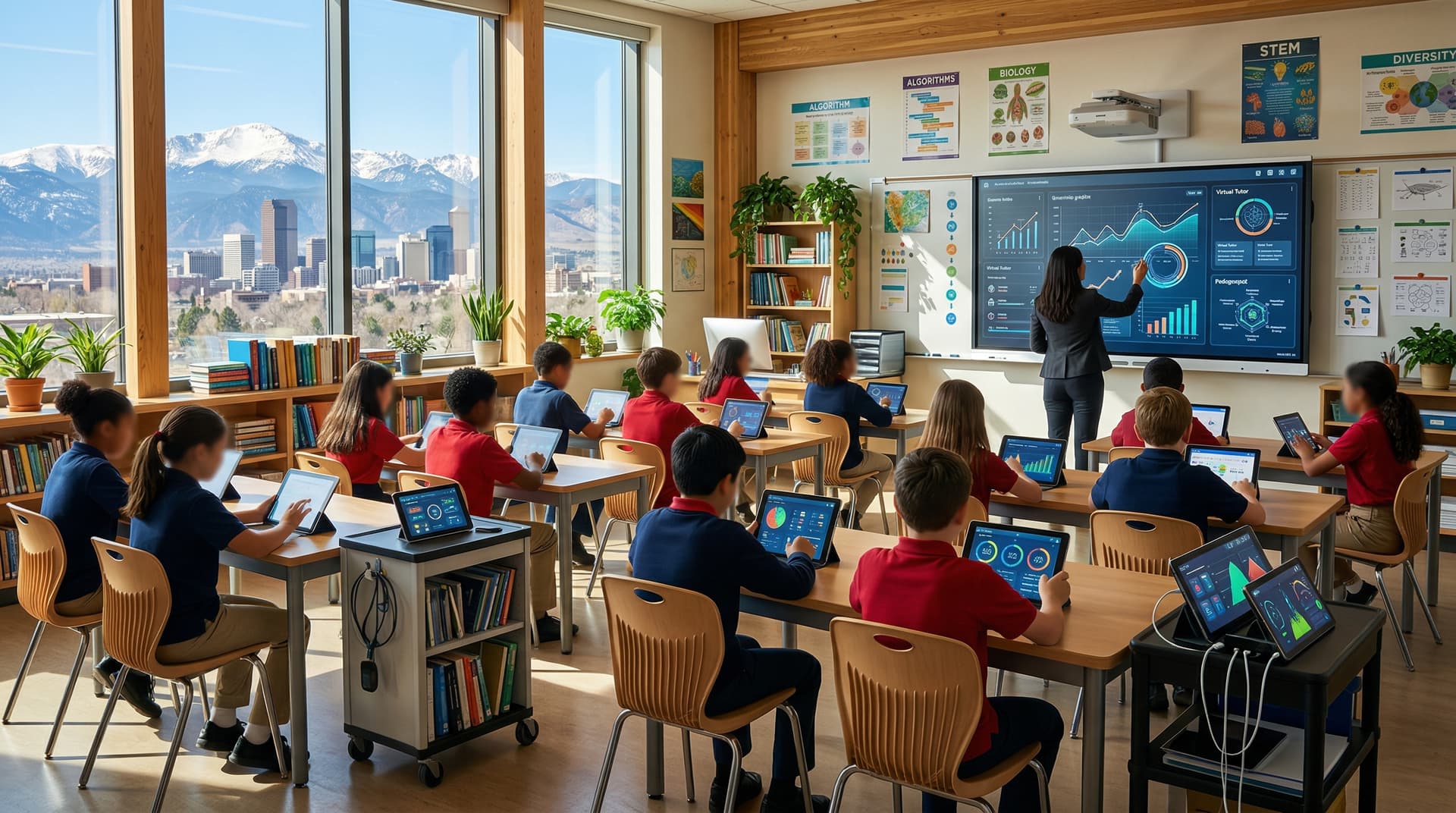
Students use tablets with AI tutors during class. The software checks answers in real time. It adjusts lesson difficulty to match each student's pace.
Denver Public Schools partnered with LearnAI, an edtech firm. Each classroom gets 25 tablets at $500 USD each, per district records. Teachers completed training last week.
The rollout ends by April 30, 2026. Privacy features include data encryption. Parents can opt out. The district follows COPPA, a U.S. law protecting children's online privacy.
LearnAI's algorithms draw from 1 million student interactions. Pilot tests in January 2026 showed 92% accuracy.
Key Benefits Close Learning Gaps
AI tools aid low-income students most. District pilots showed 15% higher reading scores for them, according to internal data.
Teachers save 10 hours weekly on grading, a University of Colorado study found. They focus more on group activities. Attendance rose 5% in test schools.
Over 70% of Denver students qualify for free lunch, U.S. Census data shows. AI helps them compete with students from wealthier suburbs.
Costs and Funding Breakdown
The full program costs $12 million USD over three years. This money buys tablets, software licenses, and training. Higher spending means better tools but strains local budgets.
State funds cover 60%. Grants pay 30%. District reserves handle 10%, budget documents state.
Microsoft donated $4 million USD for hardware on April 1, 2026. PayEd, a local fintech firm, added $1.5 million USD for secure payments.
Edtech investments rose 25% in 2026. Venture capital hit $2.5 billion USD in Q1, PitchBook reports. Denver's program attracts more startups to the area.
Digital Divide Concerns Rise
Critics argue AI widens gaps. About 20% of students lack home broadband, district data shows.
Equity advocate Maria Lopez spoke at a school board meeting on April 10, 2026. She highlighted device shortages in older buildings. Poor neighborhoods face rollout delays.
New teachers struggle with AI tools. A NEA survey found 40% feel unprepared after one training session.
Market Reactions Favor Edtech
Edtech stocks rose 3% today. LearnAI's parent company shares climbed from $42 USD to $45 USD, Nasdaq data shows.
PayEd uses blockchain for student records. Blockchain creates tamper-proof digital ledgers that prevent tampering. This ties edtech to cryptocurrency technology.
Edtech investments average 18% yearly returns, McKinsey reports. Investors eye Denver's program closely.
Broader markets stayed cautious. Bitcoin traded at $72,818 USD, up 0.8%. Ethereum reached $2,241.91 USD.
Expert Views on Future Impact
Dr. Elena Vasquez at MIT praised the launch. Her research shows 20% better outcomes in similar Boston programs. She spoke to KUSA.com on April 11, 2026.
Vasquez warned of AI biases. Urban training data may overlook rural needs. Regular updates address this issue.
A district poll on April 11 found 65% parent support. Many parents worry about over 4 hours of daily screen time.
The Denver Teachers Union demands $5,000 USD AI bonuses per member. Negotiations start next week.
Next Steps for Families and Jobs
Apps sync with home devices for homework. Fifty libraries now offer free WiFi hotspots.
Families pay nothing. Taxpayers fund it through property taxes.
Denver expects 200 new edtech jobs by 2027. Average pay reaches $85,000 USD, LinkedIn data shows.
Nearby Boulder tests VR AI tools. Districts compete for federal grants.
Path Forward Tracks Denver AI Classroom Success
Denver Public Schools will release quarterly reports on scores and equity. Leaders promise mid-year changes if problems arise.
Nationwide, 30% of U.S. districts use AI in 2026, EdWeek estimates. Federal funds accelerate adoption.
Stable grants help amid volatile markets like Bitcoin at $72,818 USD. Denver's AI classroom model may inspire other cities.