- 1. Hawaii DCCA sues kiosk operators for 30% hidden fees as Fear & Greed Index hits 29.
- 2. Bitcoin drops 1% to $76,292 USD, fueling panic buys into scam machines.
- 3. Check CoinMarketCap rates and use hardware wallets to avoid cyber theft.
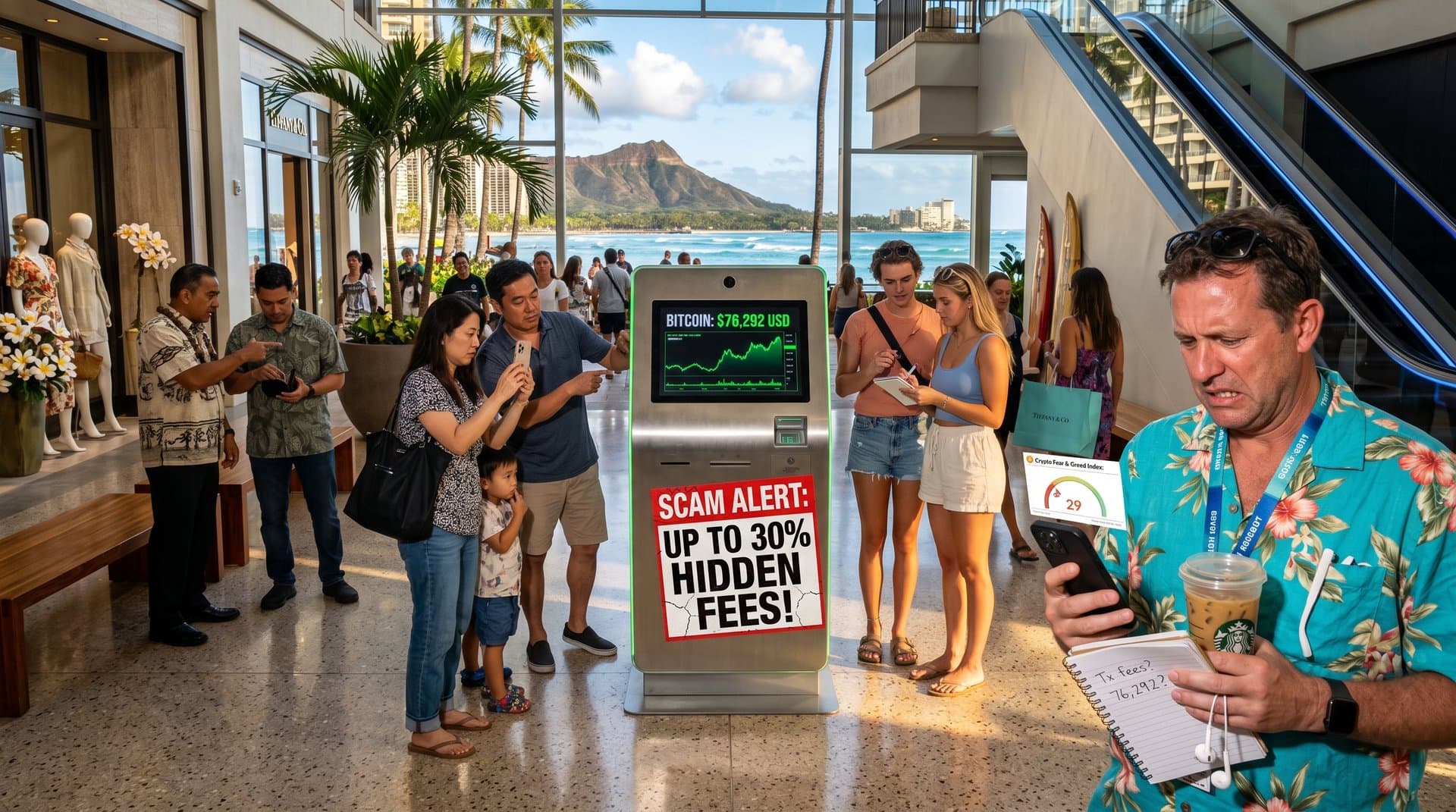
On October 10, 2024, Hawaii's Department of Commerce and Consumer Affairs (DCCA) targeted cryptocurrency kiosk scams. These kiosks charge hidden fees up to 30% above market rates. The Crypto Fear & Greed Index hit 29. Bitcoin dropped 1% to $76,292 USD, per CoinMarketCap Bitcoin page data.
The index comes from Alternative.me. CoinMarketCap tracks it too. This 0-100 score shows investor fear at low numbers and greed at high ones. A 29 score means extreme fear. It sparks panic buys that kiosks exploit.
How Cryptocurrency Kiosks Operate Like ATMs
Cryptocurrency kiosks look like regular ATMs. Users insert cash. They scan a wallet QR code. The machine sends Bitcoin or Ethereum right away.
Operators place these kiosks in Hawaii malls and tourist spots. Coinhub faces DCCA lawsuits for false price displays. DCCA filed these cases in 2024.
Weak checks let fraud and money laundering happen. Blockchain tools like CoinGecko reveal scam flows. Victims must report fast to authorities.
Fees appear only at the end. Users pay thousands extra during price dips, according to DCCA consumer complaints.
Tricks in Hawaii Cryptocurrency Kiosk Scams
Kiosks show low buy prices like Bitcoin at $76,000 USD. Fees then add 30% at the last step.
DCCA calls this the main issue: no clear fees upfront. FinCEN sets federal rules, but not all kiosks follow them.
Hawaii requires state registration for kiosks. Scams evolve faster than enforcement.
Many kiosks lack strong encryption. Malware steals QR codes. Scammers empty wallets this way.
Private keys get taken. Funds go to hidden addresses. Blockchain analysis helps trace them.
Fear & Greed Index at 29 Sparks More Scams
The Fear & Greed Index tracks market mood. Zero equals panic. 100 equals overconfidence.
Score 29 drives rushed kiosk buys. Investors seek quick rebounds in dips.
Bitcoin lost 1.0% to $76,292 USD. Ethereum fell 2.1% to $2,265.70 USD.
- Asset: BTC · Price (USD): 76,292 · 24h Change: -1.0% · Market Cap (B USD): 1,527
- Asset: ETH · Price (USD): 2,266 · 24h Change: -2.1% · Market Cap (B USD): 273
- Asset: XRP · Price (USD): 1.37 · 24h Change: -1.0% · Market Cap (B USD): 85
- Asset: SOL · Price (USD): 83.20 · 24h Change: -1.1% · Market Cap (B USD): 48
Data from CoinMarketCap Bitcoin page, October 10, 2024. Drops fuel scam ads.
Ethereum drops raise kiosk markups. Scammers offer fake deals above real prices.
Alternative.me updated the index daily. Chainalysis 2024 Crypto Crime Report notes fear boosts kiosk fraud by 25%.
Hawaii Actions Shape U.S. Crypto Rules
Hawaii leads crackdowns in California and New York. The FTC logged 46,000 crypto scam reports in 2023.
Global kiosks charge 10-20% fees on average. Chainalysis confirms this in its 2024 report.
Stablecoins like USDT hold at $1.00 USD. Their $189.5 billion market cap cuts volatility.
DCCA wants live fee screens and audits. States work together through the Money Transmission Regulators Association.
Global Cybersecurity Dangers from Kiosks
Scams hit tourists worldwide. Losses follow them home. Kiosk malware spreads to phones.
Mall Wi-Fi helps hackers. They grab transactions in progress.
Chainalysis traces 70% of scams. Recovery stays below 10%, per their data.
Protect Against Cryptocurrency Kiosk Scams
Check live prices on CoinMarketCap Bitcoin page first.
Scan QR codes with hardware wallets like Ledger or Trezor. They keep keys offline.
Ask for full fee details upfront. Walk away if refused.
Report to IC3.gov and DCCA. Share transaction IDs for tracing.
Choose exchanges like Coinbase. They have low fees and protection.
Kiosks may soon add API price feeds and cameras. Ethereum layer-2 like Optimism lowers costs safely.
Frequently Asked Questions
What are cryptocurrency kiosk scams?
Kiosks display low rates but add 30% hidden fees at checkout. Hawaii's DCCA sues operators like Coinhub for misleading users in tourist areas.
How do Hawaii cryptocurrency kiosk scams work?
Machines show Bitcoin at $76,292 USD but surge fees before payout. Weak encryption risks QR code theft and malware.
Why do scams rise when Fear & Greed hits 29?
Extreme fear (0-100 scale) prompts panic buys. Bitcoin's 1% dip drives users to overpriced kiosks without checks.
What cybersecurity steps stop kiosk scams?
Verify rates on CoinMarketCap. Use hardware wallets. Report to IC3.gov for blockchain tracing and recovery.