- Minnesota's bill bans crypto kiosks after 100+ scam reports and 20% fees.
- Indiana logged 300 complaints, leading to emergency ban by Secretary Morales.
- Bitcoin at $78,175 USD with Fear & Greed Index at 26 amid 37,000 nationwide kiosks.
Minnesota lawmakers advance House File 3489. The bill bans crypto kiosks statewide. These machines charge up to 20% fees. Scammers exploit them. Indiana and Tennessee already banned them. Bitcoin trades at $78,175 USD today.
The bill heads to committees in early 2025. Lawmakers cite over 100 local scam reports. Users lose thousands to high fees and fraud.
What Are Crypto Kiosks?
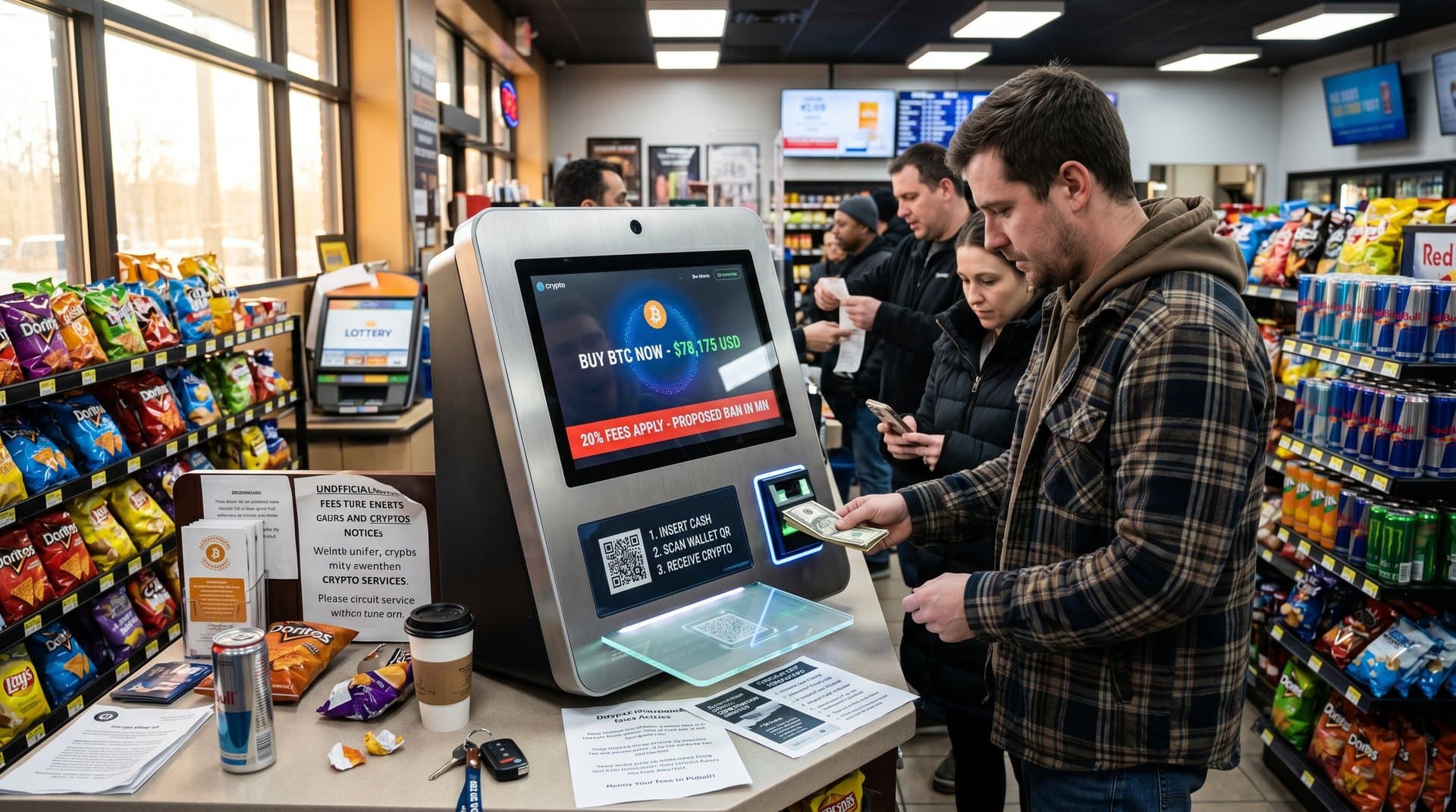
Crypto kiosks look like bank ATMs. Users insert cash bills. They scan a wallet QR code. The machine sends Bitcoin at $78,175 USD instantly.
Devices connect online. They verify trades on the blockchain. This public ledger records all crypto transfers securely.
Major makers include General Bytes from the Czech Republic. Canada's BitAccess builds others. Fees hit 20%. Apps like Coinbase charge just 1-2%. Ethereum trades at $2,309.20 USD, up 1.9% in 24 hours.
MinnPost reporter Peter Callaghan detailed the bill on January 10, 2025. Lawmakers heard victim stories in hearings.
Indiana Bans Kiosks After 300 Complaints
Indiana Secretary of State Diego Morales issued an emergency rule. He acted on October 16, 2024. His office logged over 300 complaints. Operators skipped money transmitter registration.
Scammers used kiosks in romance scams. They pushed fake investments. Victims sent cash. Crypto never arrived. Losses topped $1.5 million.
Indiana's official announcement details the action. Morales said, "Unlicensed kiosks enable fraud." His team shut 50 machines.
Tennessee Targets Unlicensed Operators
Tennessee's Department of Commerce banned unlicensed kiosk operators. Regulators acted on April 5, 2024. Scammers placed machines in gas stations. No oversight existed.
The department reported 150 fraud cases. Victims lost $5,000 on average. Tennessee now demands licenses. Operators must disclose fees.
Tennessee's order protects users. Commerce Commissioner Carter Lawrence said, "We act to stop predators."
How Kiosk Scams Drain Wallets
Scammers post fake sales on Craigslist. They push Facebook deals. Victims head to kiosks. A $100 Bitcoin buy costs $20 extra in fees.
Blockchain locks trades forever. Refunds prove impossible. XRP trades at $1.39 USD, up 1.3% today.
Police use Chainalysis software. They track funds. Minnesota lawmakers reviewed 50 cases. Victims included seniors. New crypto users suffered too.
Coin ATM Radar counts over 37,000 kiosks nationwide as of January 2025. Numbers surged 300% since 2021.
Minnesota Users Face Big Changes
A ban pushes users to apps. Cash App charges 1-3%. Coinbase requires ID checks. Chase and Wells Fargo offer direct crypto buys.
Users save big. Kiosks take $200 on a $1,000 buy. Apps cost $20-30. Bitcoin's 21 million supply cap attracts investors.
Crypto firms lobby for licenses. They suggest ID scanners. Daily limits could help. The bill may pass by summer 2025.
- Asset: BTC · Price (USD): 78,175.00 · 24h Change: +2.5% · Market Cap: $1.54T
- Asset: ETH · Price (USD): 2,309.20 · 24h Change: +1.9% · Market Cap: $278B
- Asset: XRP · Price (USD): 1.39 · 24h Change: +1.3% · Market Cap: $78B
- Asset: BNB · Price (USD): 620.16 · 24h Change: +0.8% · Market Cap: $91B
Prices from CoinGecko as of January 15, 2025.
Why States Crack Down Now
Bitcoin spot ETFs launched January 11, 2024. They drew $60 billion inflows by late 2024. Bitwise Investments reports this. Ethereum ETFs followed in July.
Over 10 million new Americans enter crypto. Kiosks target beginners in stores. States lead before SEC rules.
Fear & Greed Index sits at 26. Alternative.me data shows extreme fear. Scores under 30 signal buys for experts.
Tech Fixes and Future Outlook
Operators add biometrics. AI spots fraud. General Bytes' BATMThree scans IDs. It limits buys to $1,000 daily.
Users pick hardware wallets like Ledger. These store keys offline.
Minnesota targets 50% scam cuts. Indiana saw this post-ban. Secure options grow. Bitcoin nears $80,000. Crypto kiosks face more votes next month.
Frequently Asked Questions
What are crypto kiosks?
Crypto kiosks are cash-to-crypto machines like Bitcoin ATMs. Users insert bills to buy Bitcoin at $78,175 USD. They charge up to 20% fees and operate in stores.
Why is Minnesota considering a crypto kiosks ban?
Lawmakers cite over 100 scam reports and 20% fees. The state follows Indiana's 300 complaints and Tennessee's order. Fear & Greed Index at 26 adds caution.
Which states have banned crypto kiosks?
Indiana and Tennessee banned unlicensed kiosks. Indiana acted after 300 complaints from Secretary Morales. Tennessee reported 150 fraud cases.
How do crypto kiosks scams work?
Scammers direct victims to kiosks for fake deals. Victims pay 20% fees with no refunds due to blockchain. Ethereum at $2,309.20 USD locks funds.