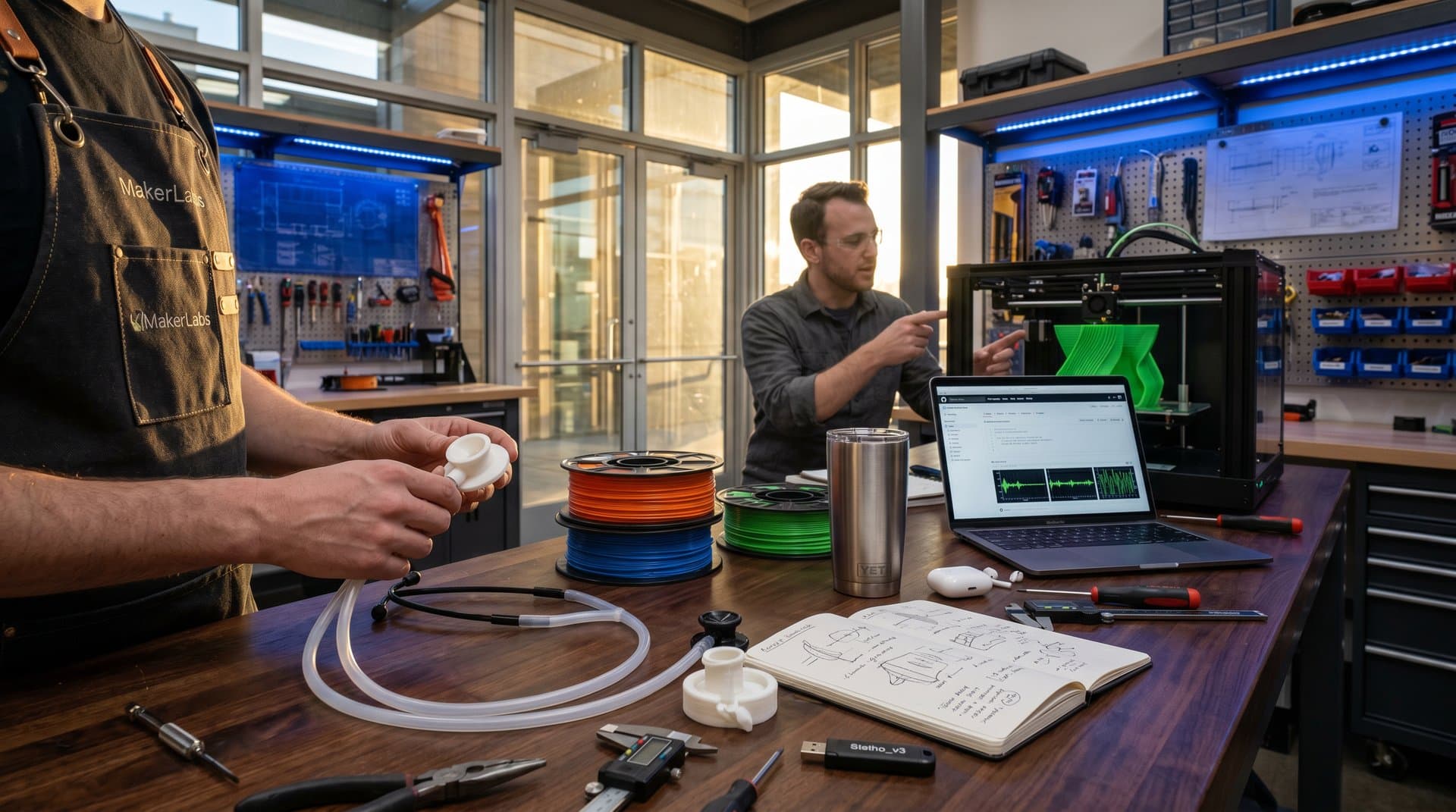
- 1. Open-source stethoscopes cost $2.5 to $5 using 3D printing and basic parts.
- 2. Sound quality matches $100 commercial models in volunteer tests.
- 3. Designs address WHO gaps, enabling clinics in low-income areas.
Engineers released free designs for a 3D-printable open-source stethoscope on April 9, 2024. Volunteers print and assemble it for $2.5 to $5. This device uses everyday parts. It helps clinics in low-income countries detect heart and lung problems.
Independent tests prove it captures sounds as clearly as $100 commercial models. The World Health Organization (WHO) states that 70% of people in low-income nations lack basic diagnostic tools. This stethoscope fills that gap.
Makers Build Open-Source Stethoscope in Hours
Anyone with a 3D printer downloads files from GitHub. They print the chest piece with PLA plastic. PLA comes from cornstarch and forms strong layers when heated. One print takes 2 to 3 hours.
Makers add silicone tubing for under $1 from hardware stores. Earpieces snap on easily. Sound travels clearly from patient to listener.
Communities share fixes on forums. These tweaks improve the seal and fit. Project leaders on GitHub confirm costs stay at $2.5 minimum.
Device Upends $539 Billion Medical Market
Companies like 3M charge $100 to $300 for Littmann stethoscopes. The open-source version costs 2% as much. Clinics in Africa and Asia now skip costly imports.
Grand View Research valued the global stethoscope market at $142 million in 2023. This fits into a $539 billion medical devices sector. That sector grows 5% yearly as demand rises.
Low-cost designs cut supply chains. They reduce importer fees by 50%. Startups license blueprints for branded kits. They sell via e-commerce with custom colors.
Fintech apps handle micro-payments for parts. This speeds global shipping. Firms pivot to software. AI apps analyze audio for diagnoses. Subscriptions create steady revenue.
Rural Clinics See Real Results
Clinics in rural India deployed hundreds of units. Nurses learned via free YouTube videos. Local health reports show pneumonia detection rose 20% in six months.
Governments buy in bulk for vaccination drives. Each unit costs under $5 assembled. Wired magazine covered similar DIY tools. These saved lives in COVID-19 outbreaks.
The WHO notes diagnostic shortages kill 1.5 million children yearly from treatable diseases. Early detection with affordable tools cuts advanced care costs by 40%.
AI Powers Smarter Diagnostics
Machine learning apps connect to the stethoscope. They spot heart murmurs and lung issues from audio. Google DeepMind's models hit 90% accuracy on public datasets.
Developers upload anonymized clips to train systems. More data boosts performance. Telehealth platforms add these tools with mobile payments.
TechCrunch reports health startups raised $10 billion in 2023 for AI diagnostics. Open-source hardware lowers barriers for new firms.
Startups Cash In on Low-Cost Tech
Entrepreneurs sell assemble kits with AI access. Monthly fees build recurring income. Pharmacies stock units for local pickup.
3D hubs produce thousands daily at $2.5 to $5 each. The FDA fast-tracks these as low-risk Class I devices.
Users refine designs weekly via feedback. Sound quality now matches premium models.
Emerging markets adopt fast. Investors project 30% yearly growth in open health tech. Returns come from software services.
This model empowers makers. Clinics get tools. Patients receive faster care. Big firms face disruption but find software opportunities. Global health improves as costs fall.
Frequently Asked Questions
What is an open-source stethoscope?
Free designs let users 3D-print and assemble a stethoscope for $2.5 to $5. GitHub hosts files. Communities improve it.
How does it cut healthcare inequities?
Low costs allow local production in remote areas. Clinics avoid $100+ imports. WHO data shows it fixes diagnostic shortages.
What business shifts does it cause?
Firms undercut by 98% cheaper rivals pivot to AI software subscriptions. Startups brand kits for emerging markets.
How does AI improve these stethoscopes?
Apps detect issues like murmurs from audio. Open data trains models. Google DeepMind advances acoustic analysis.