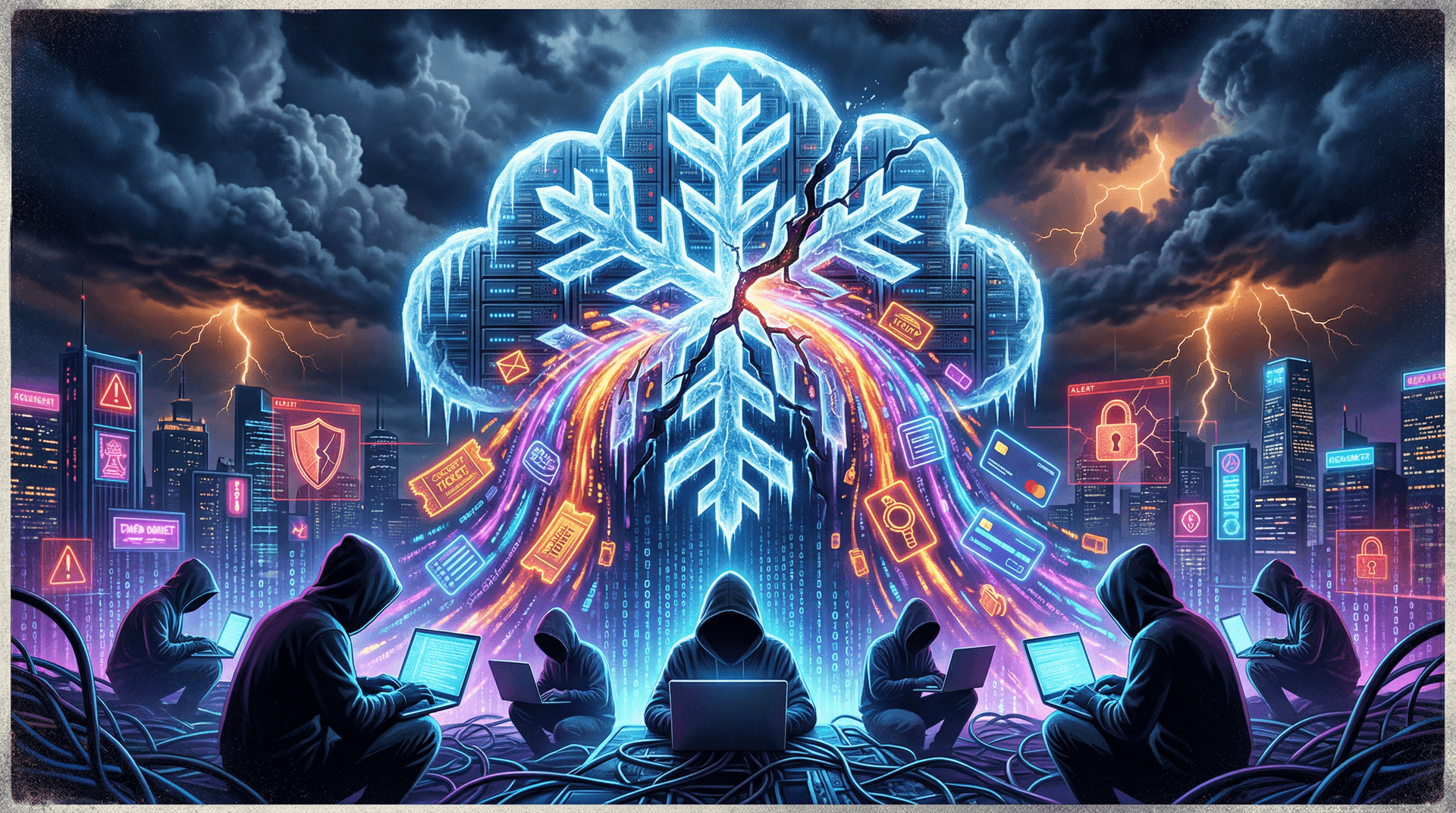
In a stark reminder of the vulnerabilities plaguing cloud infrastructure, a sophisticated hacking campaign targeted Snowflake, a leading data warehousing company, in May 2024. Attackers gained unauthorized access to customer accounts that lacked multi-factor authentication (MFA), siphoning off sensitive data from high-profile organizations including Live Nation's Ticketmaster, Santander Bank, and Advance Auto Parts. The incident, first publicly acknowledged in early May, has sent shockwaves through the cybersecurity community, highlighting persistent gaps in enterprise security practices.
The Timeline of the Attack
Snowflake initially detected suspicious activity on May 1, 2024, when it published a security advisory warning customers about potential unauthorized access attempts dating back to April 24. The company emphasized that its core platform was not directly compromised—attackers did not breach Snowflake's systems but rather exploited customer-managed accounts with stolen credentials obtained from infostealers.
Google's Mandiant threat intelligence team, investigating on behalf of affected customers, linked the intrusions to a group tracked as UNC5537. According to Mandiant's analysis released mid-May, the hackers had been active since at least February 2024, using malware-laden Snowflake demo accounts to phish credentials. By May, the scope became clear: dozens of organizations across retail, finance, and healthcare sectors were hit.
Key dates include:
- April 19 - May 14: Primary window of exploitation.
- May 2: Santander discloses breach of UK customer data.
- May 15: Live Nation (Ticketmaster's parent) files an 8-K with the SEC, revealing a cybersecurity incident involving Snowflake data.
Impacted Companies and Data Stolen
The breach's reach was broad, affecting multiple Fortune 500 firms. Here's a breakdown of the most prominent victims:
Ticketmaster (Live Nation)
Live Nation confirmed that attackers accessed a Snowflake environment containing Ticketmaster customer data, including names, addresses, emails, phone numbers, and partial credit card information. While the company stated on May 15 that initial assessments found no full credit card numbers or passwords stolen, the potential for follow-on phishing and identity theft remains high. Ticketmaster, which handles millions of transactions annually, urged affected users to monitor accounts closely.
Santander Bank
The UK arm of Santander revealed on May 3 that hackers stole personal data on 30 million customers from a Snowflake instance. This included names, account numbers, and transaction details spanning 2017-2019. Santander assured customers that no banking credentials were compromised but offered free credit monitoring as a precaution.
Advance Auto Parts
The auto retailer disclosed a breach affecting 228,000 employees' data, including Social Security numbers, stolen from its Snowflake storage. The company notified authorities and began remediation efforts immediately.
Other victims reportedly include Fortune 100 companies in healthcare and manufacturing, though specifics remain under wraps due to ongoing investigations. Mandiant estimated that the stolen data trove could fuel widespread spam, phishing, and ransomware campaigns.
How the Hackers Operated
UNC5537 employed a classic supply chain attack vector: credential stuffing with logins harvested from malware infections worldwide. Snowflake accounts without MFA were prime targets—over 160 organizations were probed, with at least 49 confirmed compromises by mid-May.
The group compressed stolen data into massive ZIP files (some exceeding 200GB) and exfiltrated them via services like MEGA. Post-exploitation, they encrypted files with tools mimicking legitimate backup software, suggesting preparation for extortion. No ransomware was deployed yet, but experts warn it's imminent.
Snowflake's response was proactive: It mandated MFA for all accounts and launched a "Security Compass" initiative to scan customer environments. However, critics argue the company should have enforced MFA earlier.
Broader Implications for Cloud Security
This incident exposes a fundamental flaw in cloud adoption: shared responsibility models where customers control access policies. Despite MFA's proven efficacy—blocking 99% of account takeover attempts per Microsoft stats—many enterprises lag in implementation.
Expert Commentary:
> "The Snowflake breaches are a wake-up call. MFA isn't optional; it's table stakes in 2024," said Kevin Mandia, CEO of Mandiant, in a May 14 interview. "Attackers are commoditizing stolen creds—any org without defenses is low-hanging fruit."
Allan Liska, Recorded Future analyst, added: "This isn't novel; it's negligence amplified by scale. Cloud providers must push harder on baseline security configs."
Regulatory fallout looms. The U.S. SEC's cybersecurity disclosure rules, effective since December 2023, compelled swift filings from Live Nation. In Europe, GDPR fines could target Santander.
Lessons Learned and Mitigation Steps
Organizations can draw several actionable insights: 1. Enforce MFA Everywhere: No exceptions for service accounts. 2. Rotate Credentials Regularly: Use passwordless auth like passkeys. 3. Monitor for Anomalies: Implement UEBA (User and Entity Behavior Analytics). 4. Vendor Audits: Scrutinize third-party configs quarterly. 5. Incident Response Drills: Test breach playbooks annually.
Snowflake pledged free security audits and enhanced threat intel sharing. Industry-wide, calls grow for standardized cloud security baselines, akin to NIST frameworks.
Looking Ahead: Ransomware's Next Frontier
As of May 23, 2024, no data has surfaced on cybercrime forums, but UNC5537's history suggests extortion ahead. The group, possibly Russian-linked, focuses on high-value targets for maximum payout.
This breach coincides with a surging ransomware landscape: Q1 2024 saw record attacks, per Chainalysis. Cloud platforms like Snowflake, handling petabytes of data, are irresistible.
For businesses, the message is clear: Prioritize security hygiene over convenience. As cyber threats evolve, complacency invites catastrophe.
Online News Point will continue monitoring developments in this story.
(Word count: 912)