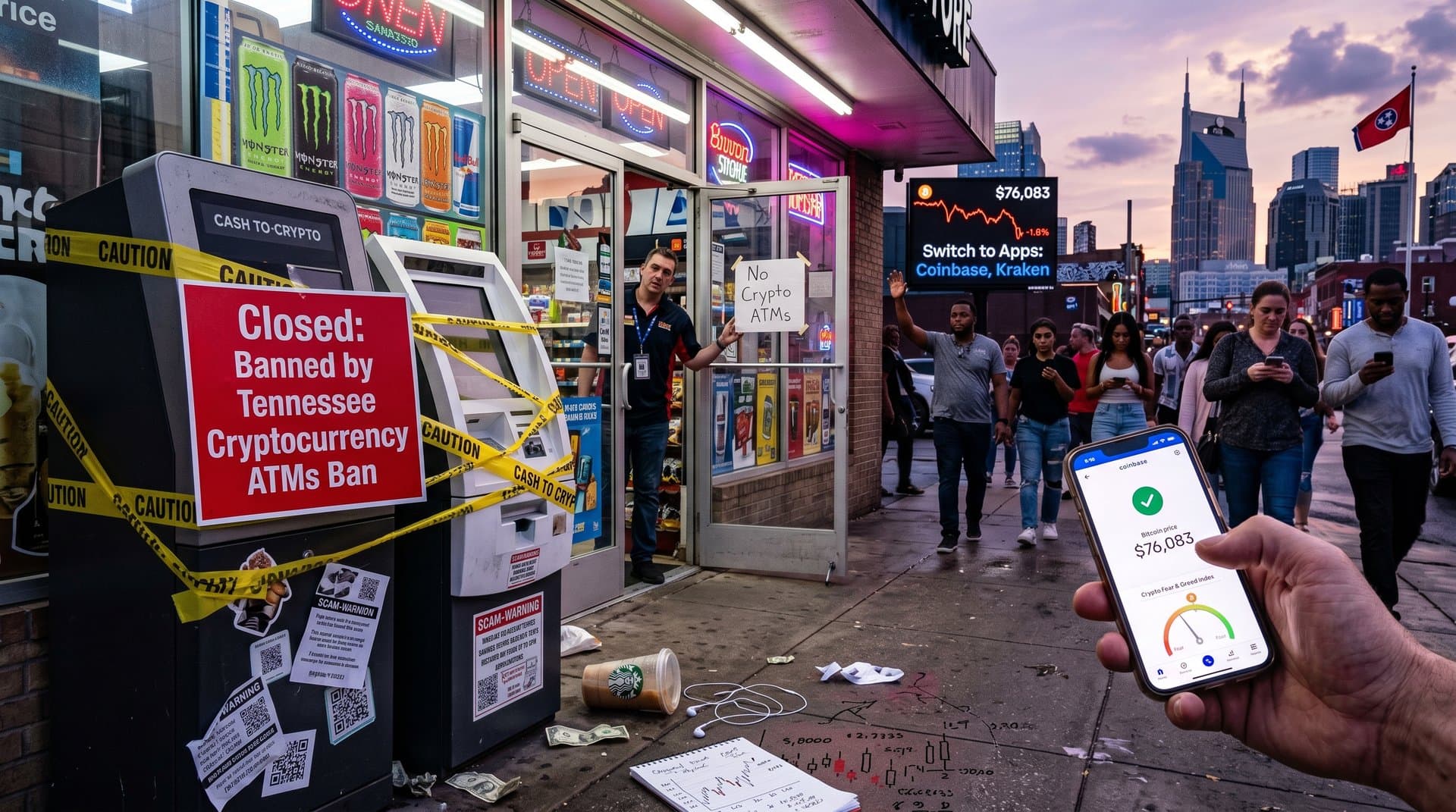
- 1. Tennessee cryptocurrency ATMs ban forces kiosk removal in 30 days with $25K fines to halt scams.
- 2. Bitcoin drops 1.8% to $76,083; Fear & Greed Index at 29 signals fear, per CoinMarketCap.
- 3. Users and operators move to apps like Coinbase; WhiteBIT climbs 4% to $57.13.
Tennessee banned cryptocurrency ATMs on October 10, 2024. The law stops all cash-to-crypto kiosks. The Department of Financial Institutions enforces it now to fight fraud.
Operators remove machines from stores in Nashville and Memphis within 30 days. Fines reach $25,000 per violation. State regulators link hundreds of fraud reports each year to these kiosks.
Bitcoin trades at $76,083, down 1.8% today per CoinMarketCap. Market capitalization—the total value of all Bitcoin—hits $1,522.7 billion USD. The Fear & Greed Index sits at 29. This gauge measures sentiment from 0 (extreme fear) to 100 (extreme greed).
Ethereum falls 2.9% to $2,258.59 ($272.6 billion USD market cap). XRP drops 1.3% to $1.37 ($84.5 billion USD). Solana slides 1.9% to $83.00 ($47.8 billion USD). WhiteBIT token rises 4.0% to $57.13 ($12.2 billion USD).
Why Tennessee Passed Cryptocurrency ATMs Ban
Crypto ATMs let users buy Bitcoin with cash. Buyers scan a wallet QR code. Fees hit 10-20%.
Scammers tamper with kiosks or install fakes. Victims lose cash and get no crypto. Or scammers drain wallets later.
Kiosks skip bank identity checks. This aids money laundering. The Federal Trade Commission (FTC) says crypto scams cost Americans over $1 billion USD yearly.
Tennessee builds on past rules. CoinDesk reported in April 2024 that Governor Bill Lee signed a licensing law.
New York demands strict kiosk licenses. Tennessee chooses a full ban.
Fintech Operators React to Cryptocurrency ATMs Ban
Firms like General Bytes lose retail spots. These companies served unbanked users without bank accounts.
Operators relocate machines outside Tennessee. Or they close down. Compliance costs climb.
Many partner with exchanges like Coinbase. Users now turn to secure apps.
- Cryptocurrency: Bitcoin (BTC) · Price (USD): 76,083 · 24h Change: -1.8% · Market Cap (B USD): 1,522.7
- Cryptocurrency: Ethereum (ETH) · Price (USD): 2,258.59 · 24h Change: -2.9% · Market Cap (B USD): 272.6
- Cryptocurrency: XRP · Price (USD): 1.37 · 24h Change: -1.3% · Market Cap (B USD): 84.5
- Cryptocurrency: Solana (SOL) · Price (USD): 83.00 · 24h Change: -1.9% · Market Cap (B USD): 47.8
- Cryptocurrency: WhiteBIT (WBT) · Price (USD): 57.13 · 24h Change: +4.0% · Market Cap (B USD): 12.2
Prices per CoinMarketCap on October 10, 2024.
Bitcoin keeps over 50% market dominance.
Users Shift After Tennessee Cryptocurrency ATMs Ban
Residents use apps like Coinbase or Kraken. These link to bank accounts for lower fees.
Stablecoins USDT and USDC stay at $1.00 each ($189.5 billion USD and $77.2 billion USD market caps).
Scam risks fall. Regulated apps offer better protection. Reuters noted in November 2023 that U.S. regulators eye crypto ATMs for laundering risks.
Decentralized finance (DeFi) grows. Platforms like Uniswap let users swap tokens directly.
Market and Economic Effects of the Ban
The ban hits a small fintech niche. Over 30,000 crypto ATMs operated nationwide before rules tightened, per industry data.
Tennessee had dozens in stores and gas stations.
About 4.5% of U.S. households lack bank accounts, per FDIC data. They used kiosks for quick access. Apps work but need phones and internet.
Bitcoin tests support at $74,000 USD. Fear & Greed at 29 hints at buying chances.
Fintech Trends After Cryptocurrency ATMs Ban
States increase crypto oversight. Startups build app-only services.
Chainalysis tools track blockchain transactions for anti-money laundering.
Venture capital favors software wallets over kiosks.
BlackRock's Bitcoin ETFs drew billions since January 2024 launches. Ethereum ETFs followed in July 2024.
Tennessee's cryptocurrency ATMs ban speeds the online shift. PayPal and Venmo offer crypto buys with strong security. Federal Reserve rate moves will influence Bitcoin's recovery. More states may ban kiosks next.
Frequently Asked Questions
Why did Tennessee enact the cryptocurrency ATMs ban?
Lawmakers banned crypto ATMs to stop scams from fake or tampered kiosks. Users lost cash often. Regulators enforce removal in 30 days with $25,000 fines.
What does the Tennessee cryptocurrency ATMs ban mean for operators?
Operators remove machines or pay fines. Fintech firms like General Bytes switch to apps like Coinbase. Compliance costs rise.
How does the Tennessee cryptocurrency ATMs ban affect Bitcoin users?
Users use regulated apps with bank links and lower fees. BTC at $76,083. Stablecoins like USDT provide safe entry.
Will other states copy Tennessee's cryptocurrency ATMs ban?
New York requires licenses. Tennessee's full ban leads the way. More states and federal rules may follow.