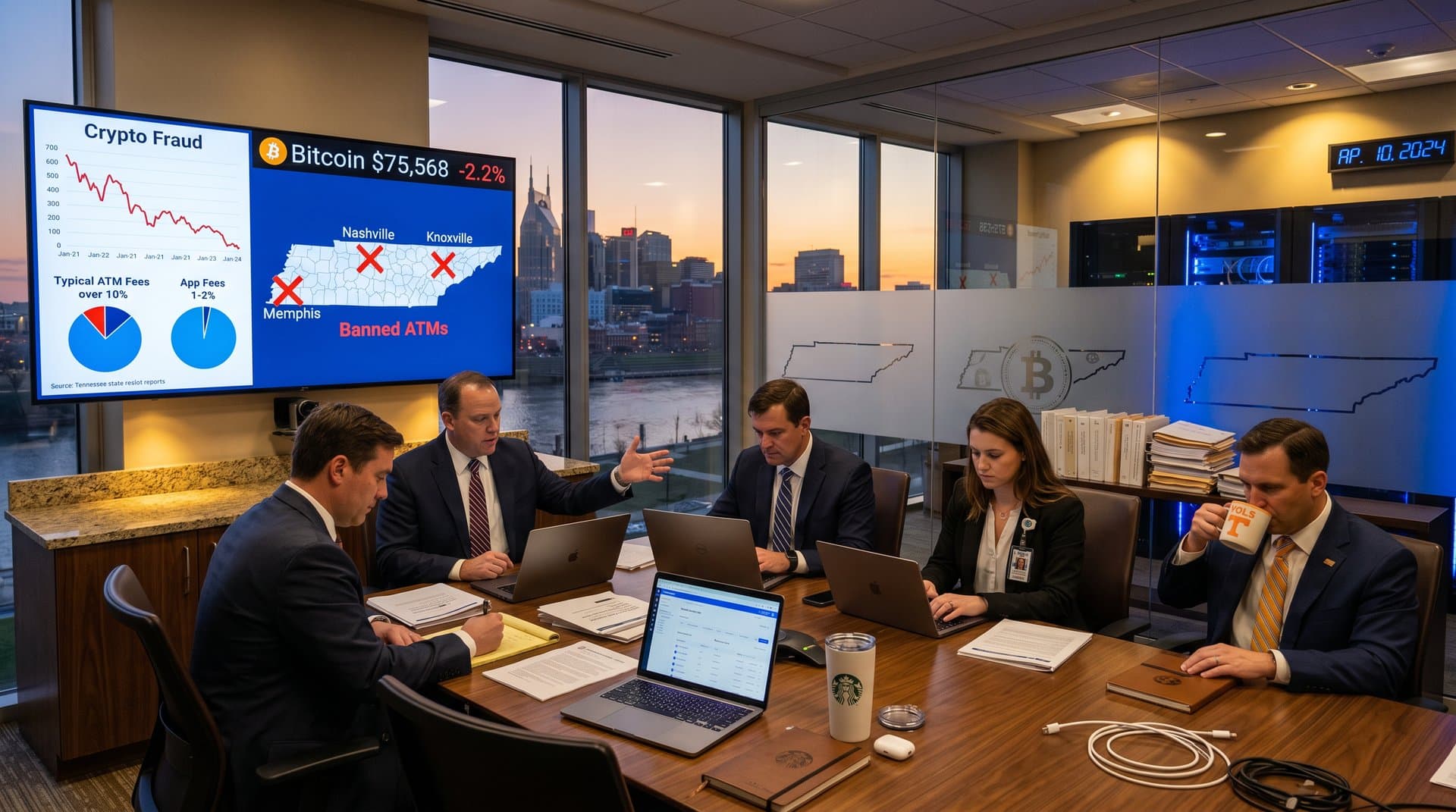
- 1. Tennessee crypto ATM ban eliminates machines charging 10%+ fees to curb fraud.
- 2. Bitcoin falls 2.2% to $75,568 USD; Fear & Greed Index drops to 29.
- 3. Users shift to apps like Coinbase for lower fees and KYC safety.
The Tennessee Department of Financial Institutions enacted the Tennessee crypto ATM ban on April 10, 2024. This rule shuts down all cryptocurrency ATMs statewide. Regulators target fraud and fees over 10%. The Nashville Post reported the decision first.
Bitcoin trades at $75,568 USD today. It fell 2.2% in the past 24 hours. Market capitalization—the total value of all Bitcoin in existence—stands at $1,512.1 billion USD, per CoinGecko data. The Fear & Greed Index from Alternative.me, which measures market sentiment from 0 (extreme fear) to 100 (extreme greed), reads 29 to signal caution.
Ethereum dropped 3.6% to $2,243.04 USD. Its market cap reached $270.7 billion USD. ATM operators must remove machines now or face fines up to $25,000 per day.
Why Tennessee Crypto ATM Ban Focuses on Fintech Fraud
Crypto ATMs let users buy Bitcoin with cash. People insert bills and scan a wallet QR code. Machines send coins instantly to the buyer's digital wallet.
These kiosks charge fees above 10%. That exceeds the 1% fees on apps like Coinbase. Scammers use them for money laundering and fake deals.
Tennessee residents filed hundreds of complaints. Lawmakers heard stories of overcharges and scams. The Tennessee Department of Financial Institutions stated the ban protects consumers.
The Nashville Post outlined the timeline and complaints on April 10. CoinGecko tracks real-time prices and market caps.
Users Shift from Gas Station Kiosks to Safer Fintech Apps
Nashville drivers can no longer buy crypto quickly at gas stations. They turn to apps like Cash App, Revolut, and Coinbase instead.
These apps charge under 2% fees. They demand identity verification, called KYC, to stop criminals. Banks like JPMorgan Chase now offer crypto services directly.
The Tennessee crypto ATM ban speeds up growth in regulated platforms. Safer options expand fast. Users buy Bitcoin at $75,568 with strong protections.
Coinbase CEO Brian Armstrong tweeted on April 9 that such rules build trust.
Current Market Prices Reflect Caution After Ban
- Cryptocurrency: Bitcoin (BTC) · Price (USD): 75,568.00 · 24h Change: -2.2% · Market Cap (B USD): 1,512.1
- Cryptocurrency: Ethereum (ETH) · Price (USD): 2,243.04 · 24h Change: -3.6% · Market Cap (B USD): 270.7
- Cryptocurrency: XRP · Price (USD): 1.36 · 24h Change: -2.1% · Market Cap (B USD): 84.2
- Cryptocurrency: Solana (SOL) · Price (USD): 82.49 · 24h Change: -2.7% · Market Cap (B USD): 47.5
- Cryptocurrency: Dogecoin (DOGE) · Price (USD): 0.11 · 24h Change: +3.6% · Market Cap (B USD): 16.2
CoinGecko provided these figures as of April 10. Glassnode on-chain data shows fewer Bitcoin inflows to exchanges during this regulatory news.
Broader Fintech Shifts Sparked by Tennessee Crypto ATM Ban
States like New York watch Tennessee closely. BlackRock's 2024 Bitcoin ETFs drew $12.7 billion USD in investments already, per ETF.com reports.
The EU's MiCA rules start in 2026. They unify crypto standards across 27 nations. U.S. states act first with bans like this.
Stablecoins rise as options. Circle's USDC holds $77.3 billion USD at $1.00 per token. Tether's USDT leads at $189.5 billion USD, according to CoinMarketCap.
Bitcoin Depot (NASDAQ: WBT) stock fell 1.8% to $53.73 USD. Yahoo Finance lists its market cap at $11.5 billion USD. Operators move to Florida.
High Fees Hindered Crypto Adoption Before the Ban
ATMs helped unbanked users get instant access. But fees over 10% slowed mainstream use. Exchanges give under 1% with high volumes.
Tennessee puts safety first. Apps use KYC against crime. This matches worldwide shifts.
Federal Reserve Chair Jerome Powell spoke on rate cuts in his April 10 testimony to Congress. Lower rates could ease fear at index 29. More states may launch their own crypto ATM bans soon. The Tennessee crypto ATM ban sets a model for consumer protection in fintech.
Frequently Asked Questions
Why did Tennessee ban crypto ATMs?
Regulators target fraud and fees over 10%. Scammers laundered money through kiosks. The state protects users with this move.
How does the ban change Bitcoin access in Tennessee?
Cash kiosks vanish. Apps like Coinbase offer lower fees and safety. Bitcoin stays at $75,568 via banks and fintech.
Why are crypto ATM fees so high?
They enable instant cash buys. Fees top 10%, unlike 1% on exchanges. Tennessee ends this to aid consumers.
What fintech trends follow the Tennessee ban?
Stablecoins like USDT grow to $189.5B. Banks add crypto after 2024 ETFs. Rules boost safe platforms.