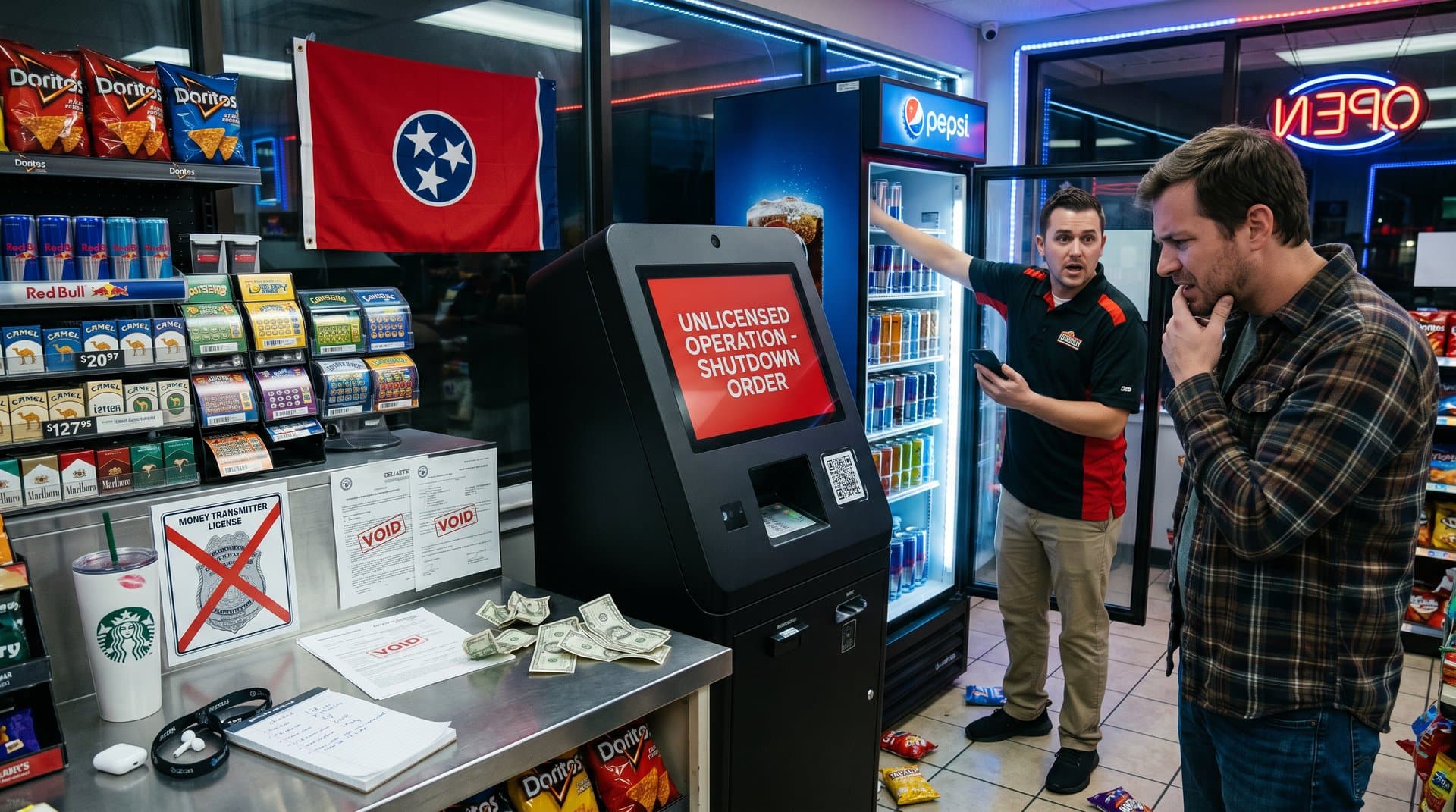
- 1. Tennessee crypto ATM ban requires licenses; unlicensed kiosks close now.
- 2. Bitcoin falls 0.5% to $75,872 USD; Fear & Greed Index at 26 signals fear.
- 3. Users switch to apps like Coinbase; compliance raises fees 5-10%.
Governor Bill Lee signed the Tennessee crypto ATM ban into law on July 1, 2024. The law requires operators to obtain money transmitter licenses from the Tennessee Department of Financial Institutions (TDFI). Unlicensed kiosks must shut down right away to fight fraud. CoinDesk first reported the signing details.
Bitcoin trades at $75,872 USD today. It fell 0.5% in the past 24 hours, per CoinGecko data. Ethereum dropped 1.4% to $2,254.80 USD. XRP lost 0.9% to $1.37 USD. BNB declined 1.0% to $617.38 USD. The Fear & Greed Index reads 26. This score shows fear among investors on a 0-100 scale where low numbers signal caution. Alternative.me tracks the index daily.
Crypto ATMs Let Users Buy Coins Fast But Attract Scammers
Crypto ATMs let people buy Bitcoin or other coins with cash. Users scan a wallet QR code. They insert bills. Machines send digital assets after deducting fees, often 10 to 20 percent of the amount. Kiosks sit in gas stations, malls, and stores for quick access.
Scammers target these machines. Fraudsters set up fake kiosks. These send coins to thief wallets. Victims lose cash with no way to recover it. TDFI received over 50 complaints in 2023, per their annual report.
Tennessee now protects consumers with this ban. The move matches federal rules from the Financial Crimes Enforcement Network (FinCEN). FinCEN requires licenses for money services across the U.S. since 2013.
Users Adapt After Tennessee Crypto ATM Ban Takes Effect
Tennessee has about 250 crypto ATMs, per Coin ATM Radar data as of June 2024. Unlicensed operators must close within 30 days. Licensed ones stay open after background checks and $100,000 bonds.
Users lose quick cash options. Many switch to apps like Coinbase or Binance.US. These need bank links and take 1 to 5 days for transfers. Fees may rise 5 to 10 percent without ATM competition, experts predict.
Small businesses face the biggest hit. Compliance costs reach up to $50,000 per year. These push some operators out. Larger firms like Bitcoin Depot adjust faster.
- Asset: BTC · Price (USD): 75,872.00 · 24h Change: -0.5% · Market Cap (USD): 1.49 trillion
- Asset: ETH · Price (USD): 2,254.80 · 24h Change: -1.4% · Market Cap (USD): 271 billion
- Asset: XRP · Price (USD): 1.37 · 24h Change: -0.9% · Market Cap (USD): 78 billion
- Asset: BNB · Price (USD): 617.38 · 24h Change: -1.0% · Market Cap (USD): 90 billion
CoinGecko supplied this data as of July 1, 2024.
Fintech Firms Rush to Meet New Tennessee Crypto ATM Ban Rules
Operators apply for licenses now. Circle, which issues the USDC stablecoin, holds approvals in 40 states. USDT from Tether stays at $1.00 USD amid market swings.
Tennessee follows New York's BitLicense from 2015. That rule cut unlicensed ATMs by 70%, per BitLicense Tracker. The EU's MiCA rules start fully by January 2026. They require anti-money laundering checks.
Startups shift to mobile apps and peer-to-peer platforms like LocalBitcoins. Bitcoin spot ETFs gained SEC approval on January 10, 2024. They drew $15 billion in inflows. Ethereum ETFs launched July 23, 2024. They pulled $1.1 billion on the first day, per Bloomberg analysts.
Nashville's fintech hub grows fast. Firms use Chainalysis software to check transactions for crimes. Chainalysis stopped $1.2 billion in scams last year. Nashville Post covered local business effects.
Tennessee Crypto ATM Ban Points to Wider U.S. Regulation Trend
Other states watch Tennessee closely. Texas and Florida saw over 200 scam cases in 2023, per their attorney general offices. Fewer fraud reports could lead to 10 more state bans by 2025.
Bitcoin's halving on April 19, 2024 cut new coin supply by 50 percent. This scarcity supports higher long-term prices, analysts note. Short-term fear lingers at index 26.
TDFI will issue guidance by August 2024. Operators seek fee breaks for low-volume machines.
Regulated crypto builds trust. It drives growth. ETFs show investors want rules. Safer options could attract $100 billion more by 2026, per Galaxy Digital forecasts.
Frequently Asked Questions
What is the Tennessee crypto ATM ban?
Governor Bill Lee signed a law requiring money transmitter licenses for crypto ATM operators. Unlicensed machines must close right away to stop scams.
Why did Tennessee ban unlicensed crypto ATMs?
Scammers use fake kiosks to steal funds. State regulators acted on consumer complaints. Licensed operators continue with oversight.
How does the Tennessee crypto ATM ban affect users?
Cash-to-crypto at unlicensed spots ends. Users move to apps like Coinbase. Bitcoin stays near $75,872 despite news.
What national trends follow the Tennessee crypto ATM ban?
States like New York have similar rules. Federal FinCEN pushes licensing. EU MiCA influences U.S. regs by 2026.