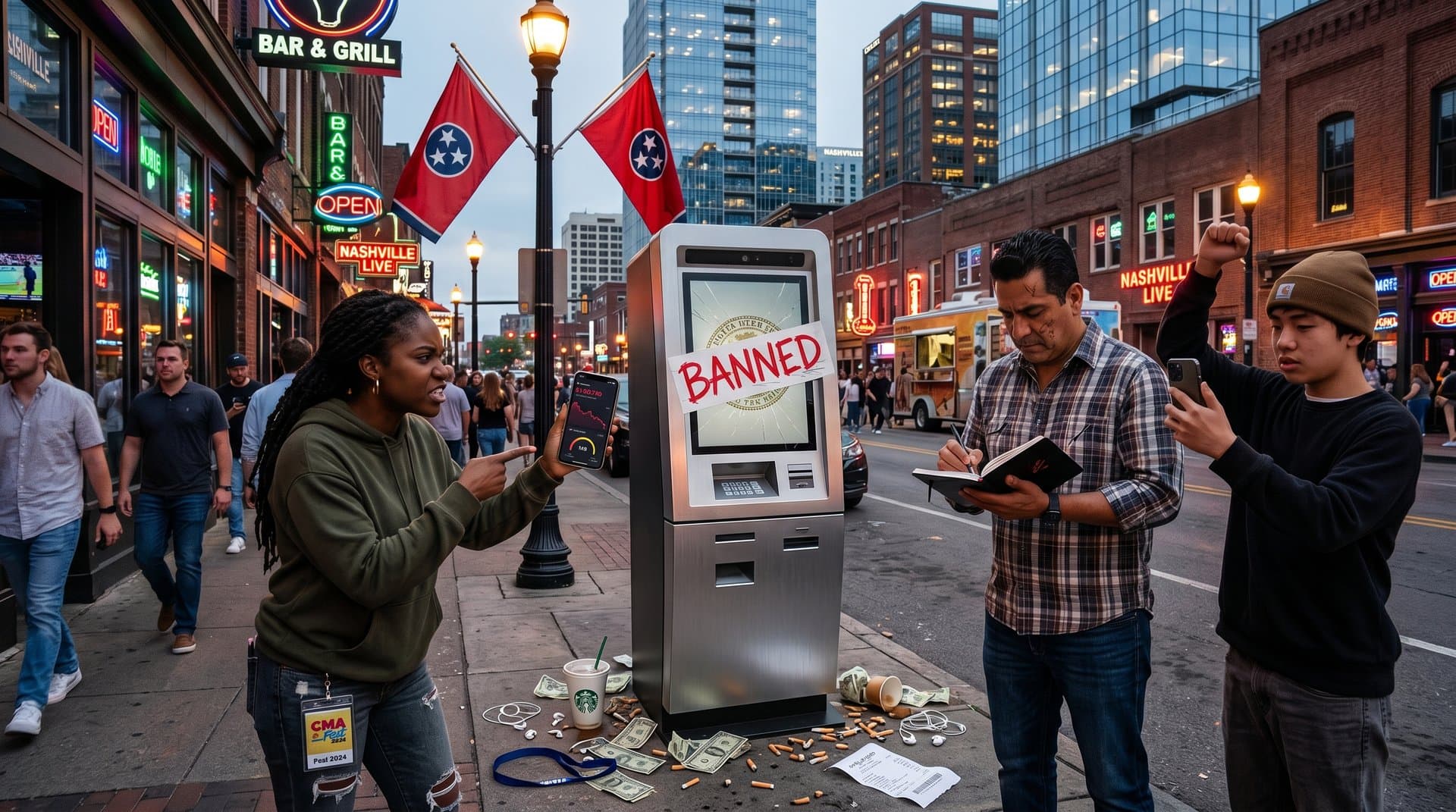
- 1. Tennessee bans all crypto ATMs to curb scams and laundering.
- 2. Bitcoin falls 1.7% to $75,763 USD; Fear & Greed at 29.
- 3. States like Tennessee fill federal regulation gap on kiosks.
Tennessee lawmakers enacted the Tennessee crypto ATM ban on April 10, 2024. The law forces operators to remove all crypto ATMs from the state. The Nashville Post first reported it. The move targets scams and money laundering. Bitcoin trades at $75,763 USD, down 1.7% in 24 hours.
The Fear & Greed Index from Alternative.me fell to 29. This score shows extreme fear in markets.
What Are Crypto ATMs? High-Risk Gadgets for Cash-to-Crypto
Crypto ATMs resemble vending machines. Users insert cash. They scan a wallet QR code. The machine sends Bitcoin or other cryptos to the wallet. Fees hit 10% to 20% per use.
These kiosks link to blockchains through APIs. They validate bills and print receipts. But they allow anonymous buys. This boosts fraud risks. The Chainalysis 2024 Crypto Crime Report found $1.7 billion USD in global illicit activity tied to them.
Tennessee officials label them money laundering gateways. Criminals convert illegal cash to crypto without ID checks.
Why Tennessee Passed the Crypto ATM Ban
Scams surged. The Federal Trade Commission (FTC) logged over 10,000 crypto complaints in 2023. Many linked to ATMs. The Nashville Post covered local losses of thousands of dollars.
Coin ATM Radar counts over 1,000 U.S. crypto ATMs. Tennessee bans them all first. Fines start at $1,000 per machine daily from June 1, 2024.
The Securities and Exchange Commission (SEC) regulates online exchanges like Coinbase. It skips kiosks. States act. New York limits fees to 7.5% and demands licenses.
Bitcoin Depot, a top operator, plans to comply. It runs 200+ machines nationwide.
Market Falls After Tennessee Crypto ATM Ban News
Bitcoin dropped 1.7% to $75,763 USD. Ethereum fell 3.3% to $2,247.33 USD. XRP lost 1.7% at $1.37 USD. BNB dipped 1.6% to $615.84 USD. USDT stayed at $1.00 USD.
- Asset: BTC · Price (USD): 75,763 · 24h Change: -1.7%
- Asset: ETH · Price (USD): 2,247.33 · 24h Change: -3.3%
- Asset: XRP · Price (USD): 1.37 · 24h Change: -1.7%
- Asset: BNB · Price (USD): 615.84 · 24h Change: -1.6%
CoinGecko data from April 11, 2024, tracks these drops.
The Fear & Greed Index drop shows caution. Traders worry about more state bans slowing crypto growth.
How the Ban Hits Users and Operators
Users lose fast cash-to-crypto access. Banked people use apps like Coinbase. Unbanked households—4.5% of U.S. per FDIC data—lose an on-ramp.
Operators adapt. Bitcoin Depot eyes KYC upgrades. Its 2023 transactions hit $1.8 billion USD, mostly from ATMs.
Experts see pros and cons. Bans cut fraud but raise costs. They may spur regulated tech like secure wallets.
States Fill Federal Gap on Crypto Gadgets
Reuters reported on April 9, 2024, that California and Florida consider limits. Congress stalls federal bills.
The National Association of Attorneys General (NAAG) coordinates states. Tennessee leads. Texas and Ohio may follow.
The Tennessee crypto ATM ban exposes federal inaction. States gain power. Firms adapt or pay fines. Future ATMs may add AI fraud checks.
Clear rules could lift confidence. Bitcoin's market cap holds at $1.49 trillion USD per CoinGecko.
Frequently Asked Questions
What caused the Tennessee crypto ATM ban?
Lawmakers targeted kiosks for scams and money laundering. Nashville Post reported the removal order.
How does the ban affect Bitcoin prices?
Bitcoin dropped 1.7% to $75,763 USD. Fear & Greed Index at 29 signals fear.
Why do states regulate crypto ATMs before feds?
SEC regulates exchanges, not kiosks. Tennessee fills the gap, like New York.
What replaces banned crypto ATMs?
Apps like Coinbase take over. Operators add KYC. Ethereum falls 3.3% to $2,247 USD.